CIIE 2025: Czech Participation and Current Trends on the Chinese Market
18.11.2025 / 04:13 | Aktualizováno: 03.12.2025 / 05:10
From 5 to 10 November 2025, Shanghai hosted the 8th edition of the China International Import Expo (CIIE), the largest Chinese trade fair dedicated exclusively to imported goods. Czech companies again made their presence felt this year, taking advantage of multiple platforms within the fair to present their products. They were supported on site by Consul General Jindřich Kubovský.
This year’s edition of the fair—established on the initiative of President Xi with the stated aim of opening the Chinese market to the world, increasing imports, and attracting foreign products and services—brought together more than 4,000 foreign enterprises from 155 countries and regions. Spread across 16 exhibition halls, covering an area of more than 60 football fields, the event featured several Czech exhibitors, primarily from the food & beverage and glassmaking industries.
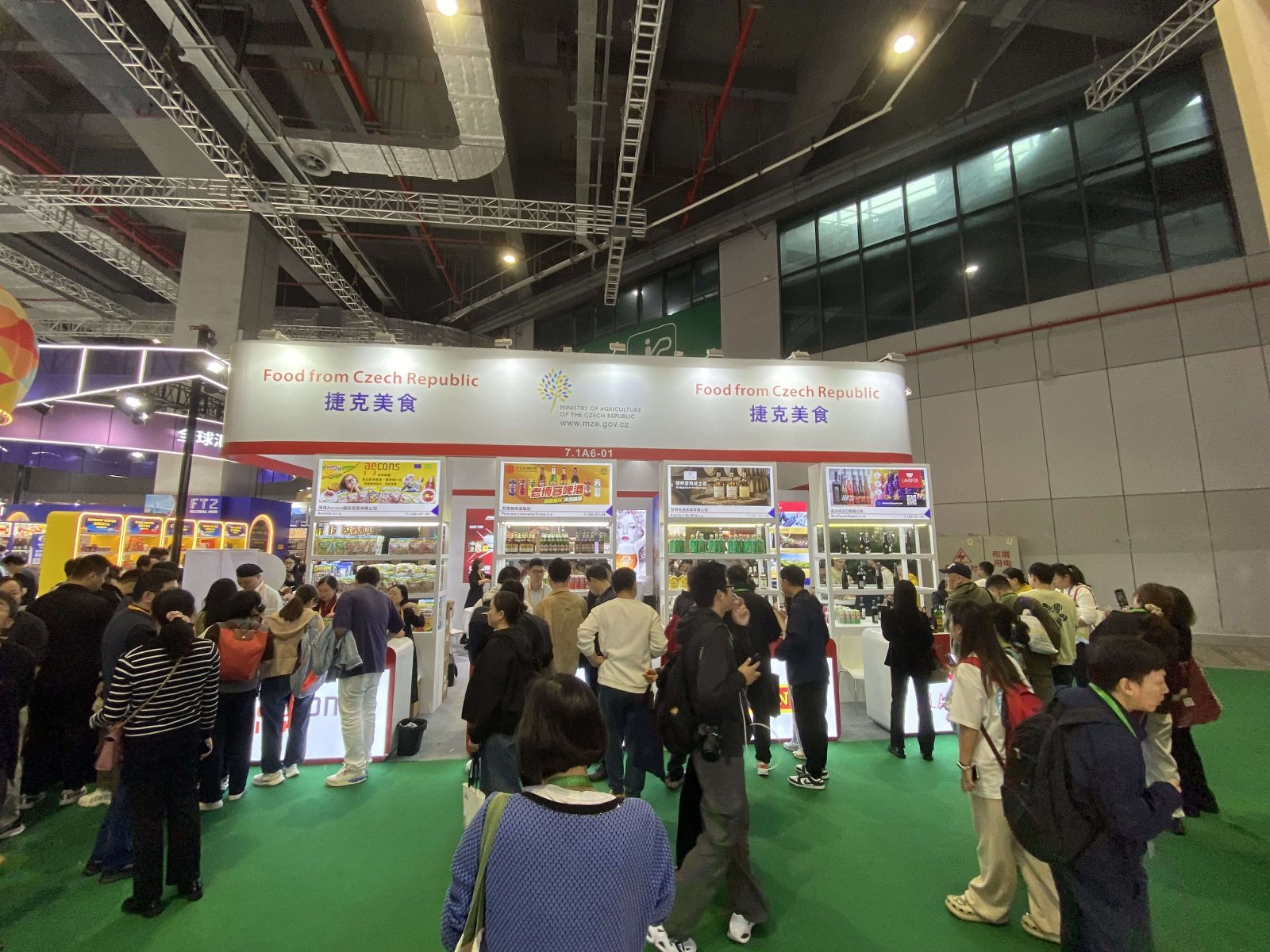
Czech Pavilion
Within the “Food from the Czech Republic” pavilion, organized by CzechTrade, Czech companies showcased a diverse portfolio ranging from healthy foods and sports nutrition to traditional beer, wine, spirits, and natural spring water. Returning exhibitors included BonaVita, Lobkowitz, Rudolf Jelínek, Lahofer, Fromin, and Amix Production. Their participation was supported by a subsidy programme of the Ministry of Agriculture of the Czech Republic.
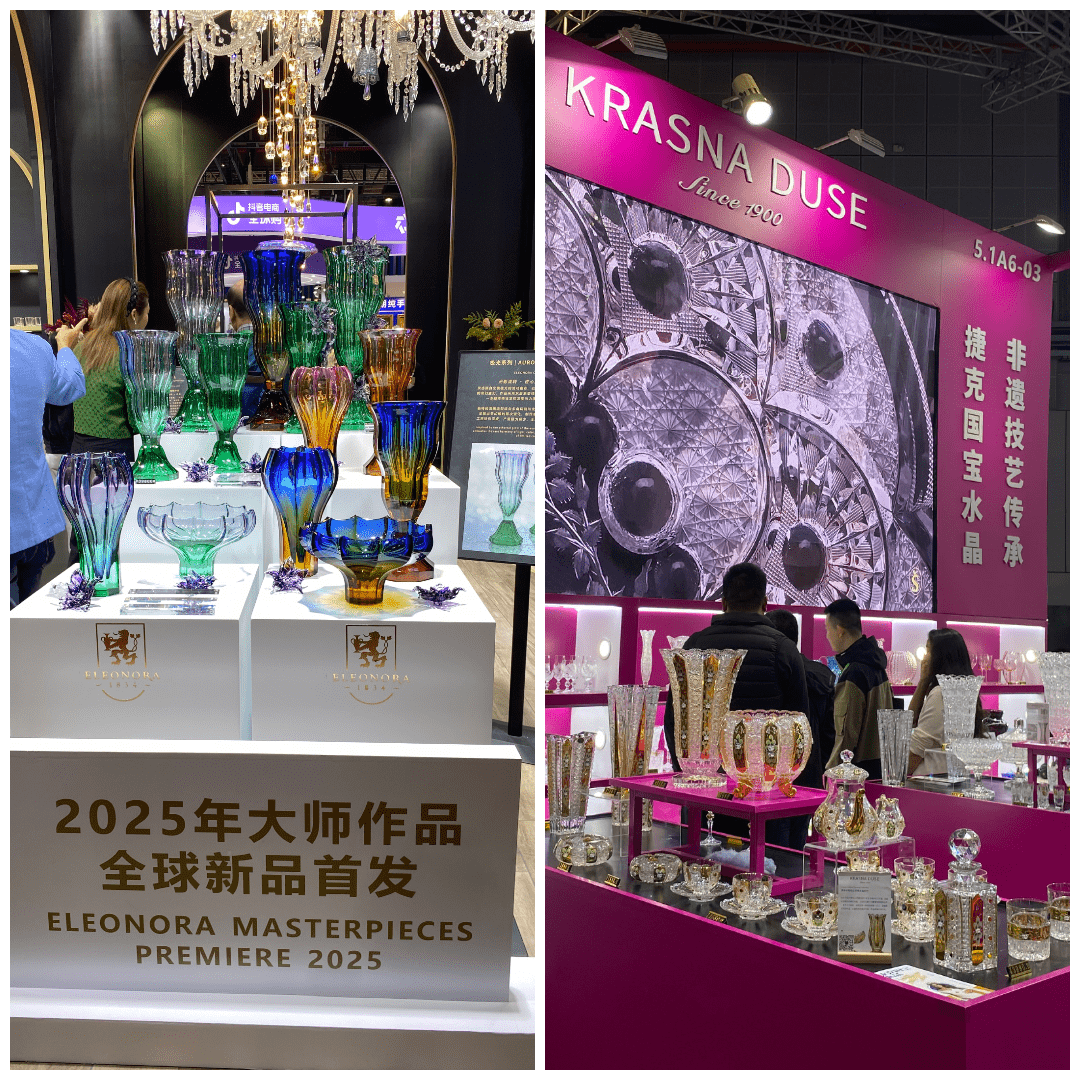
Separately, Czech glassmakers were also represented, including Eleonora, Crystal Bohemia, and Šenýr Bijou, alongside several Czech breweries and the well-known Czech confectionery brand Marlenka.
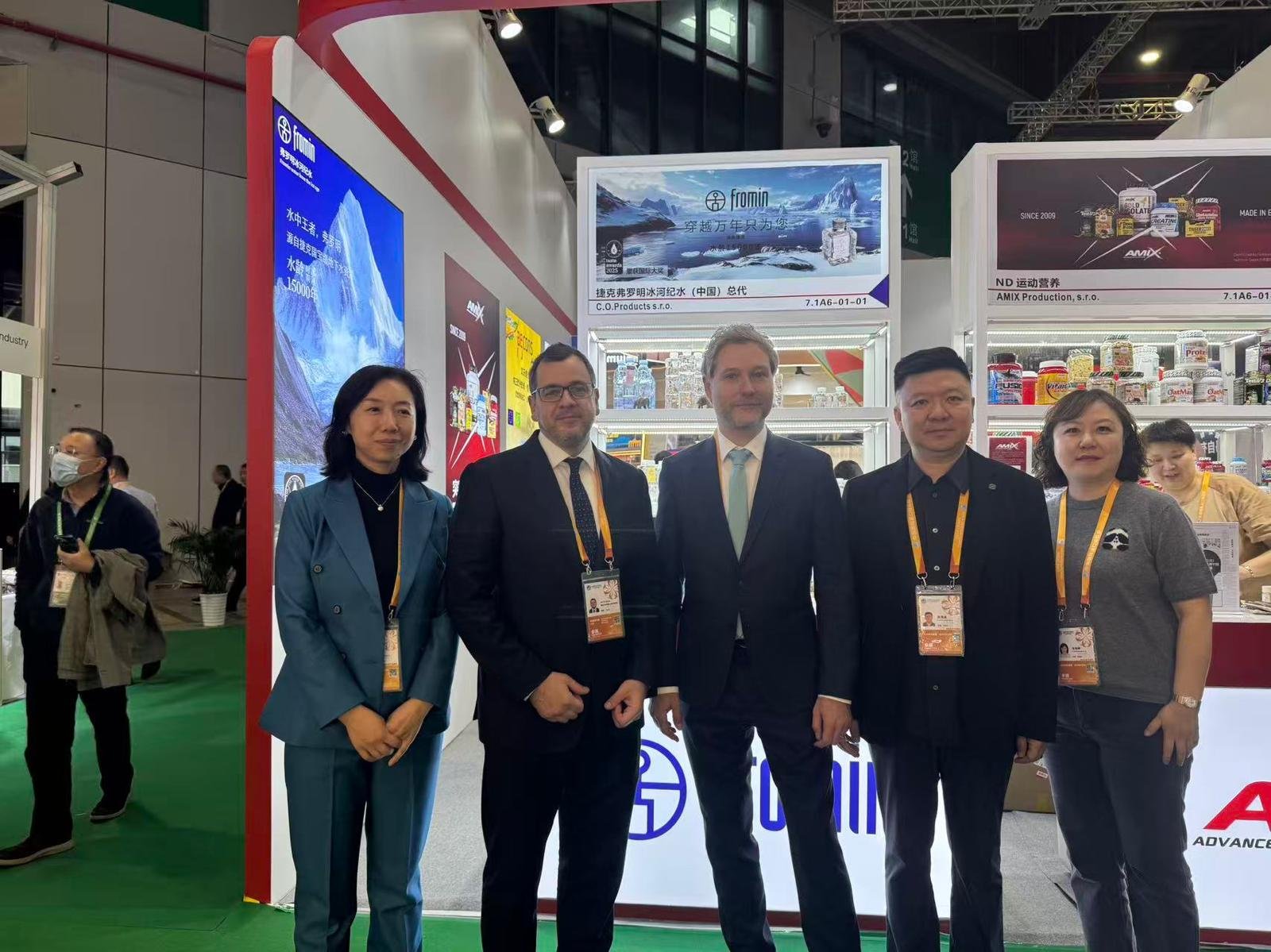
The Czech stands were supported by representatives of the Consulate General, led by Consul General Jindřich Kubovský, as well as by CzechTrade’s Shanghai director Jan Zapletal. They took part in official booth openings alongside Chinese partners and met with exhibitors to discuss their activities in China, current challenges, and opportunities for further cooperation and support from the Consulate General.
Challenges and Opportunities of the Chinese Market
The Chinese market is one of the world’s largest but also one of the most competitive. To succeed, companies must remain active, visible to Chinese consumers, and attentive to new trends—especially in e-commerce, digital marketing, and the use of local social media. Participation in fairs such as CIIE thus represents not only a commercial step but also a strategic investment.
Although Chinese consumers still generally prefer domestic products, there are promising opportunities for foreign brands, particularly in the F&B sector. European goods enjoy a reputation for high quality, safety, and credibility—advantages that Czech companies can and should leverage.
A key factor for success is adapting to local habits and consumer behavior. For companies newly entering China, brand-building and trust-building are essential, often through social media and influencers. As emphasized repeatedly, digitalization plays a central role in China; online marketing and the use of e-commerce platforms—today the main sales channels—are indispensable.
It is also critical to understand and comply with local regulatory requirements and certifications, which can be complex. Establishing cooperation with local partners or distributors—who best understand the specifics of the Chinese market—is crucial. Without them, success is highly unlikely.
A Recipe for Success
Although the number of Czech firms attending such events has slightly decreased in recent years, those genuinely targeting the Chinese market now understand it better and present themselves more effectively. They collaborate with local distributors, use online tools including live-streaming, and rely on major platforms such as TikTok to reach customers directly and strengthen their brand presence.
A good example is Amix, a producer of nutritional supplements, which is achieving growing success in China thanks to a strong local partner and cooperation with KOLs (Key Opinion Leaders). Similarly, Fromin is beginning to benefit from its original concept of “ice-age water” and its premium-brand positioning.
Some Czech companies also used the booth of ICBC, China’s largest bank, which offered foreign exhibitors the opportunity to present on its main stage—an excellent chance to introduce new products or announce new partnerships. For Czech brands, this provided not only heightened visibility but also increased trustworthiness; association with ICBC carries significant weight among Chinese consumers.
Czech alcoholic beverages also had a strong presence. Czech beer and spirits retain potential thanks to their tradition and quality. While Chinese consumers tend to prefer lighter beers and it is difficult to compete with the many inexpensive local brands, the segment of premium beers with distinctive taste and authentic branding still offers valuable opportunities. Lobkowitz continues strengthening its name in China, Rudolf Jelínek is expanding through cooperation with its local representative, and Lahofer remains one of the few Czech wines available on the Chinese market. Czech alcohol certainly has potential in China, but success requires patience, marketing, and thoughtful branding.
Jan Kubačka, Economic Diplomat
Consulate General of the Czech Republic in Shanghai
Galleries
Czech presence at the CIIE 2025 in Shanghai