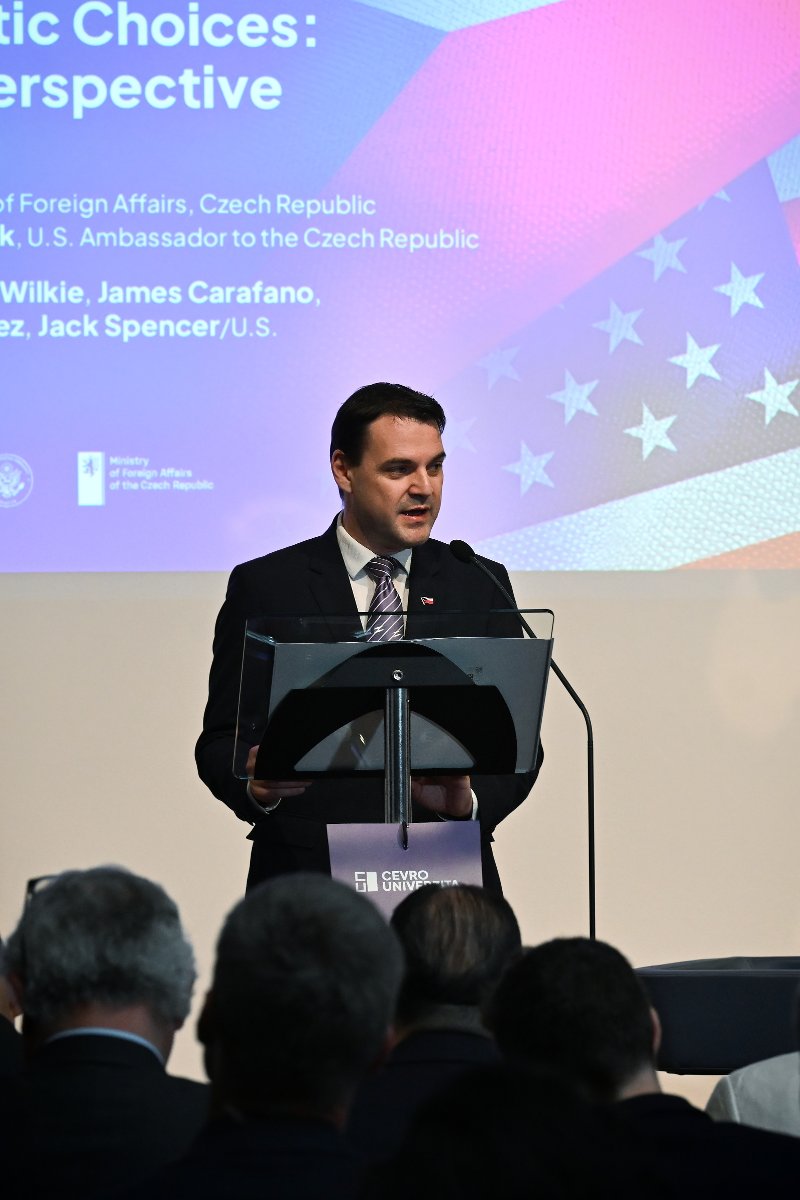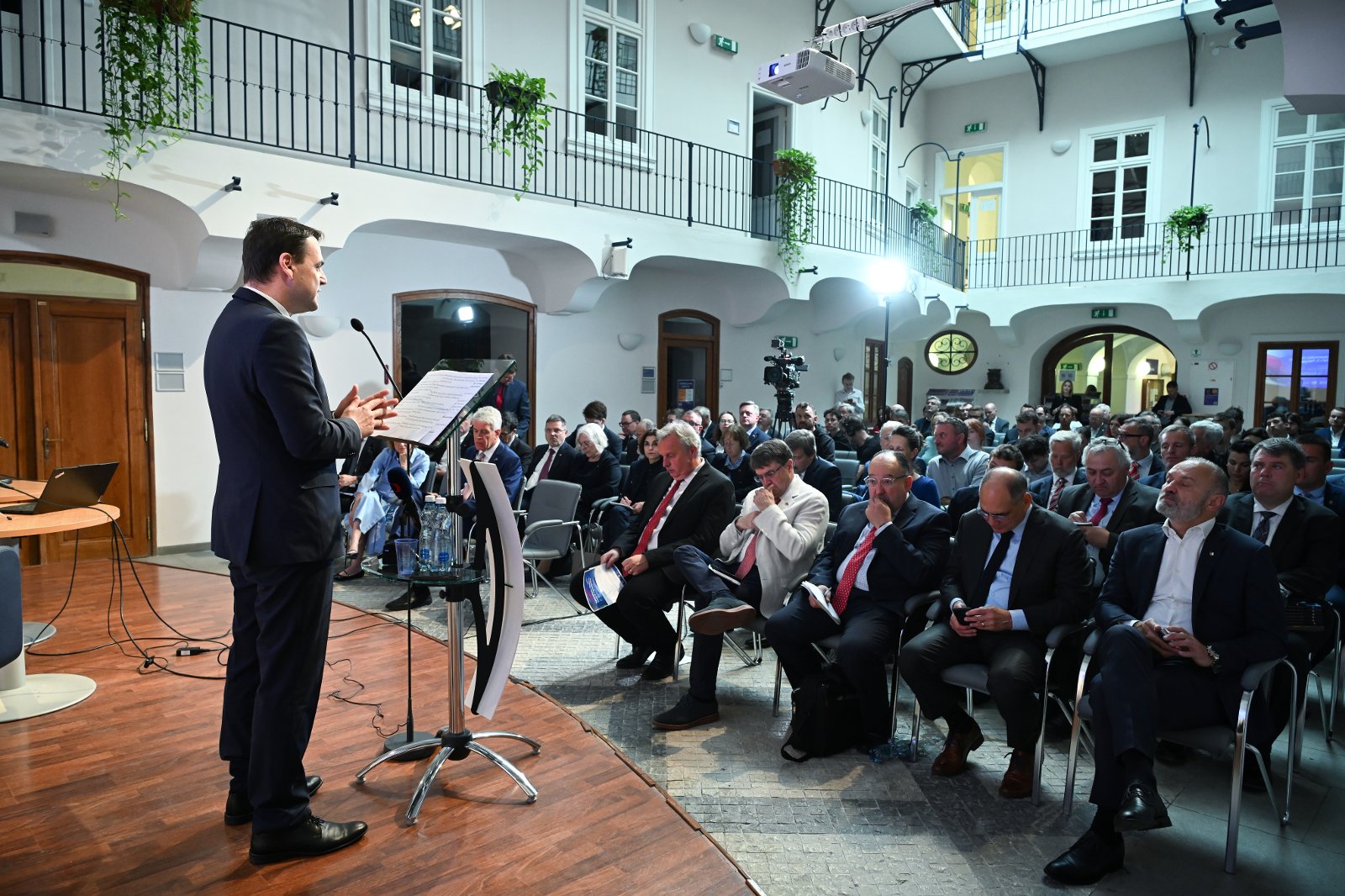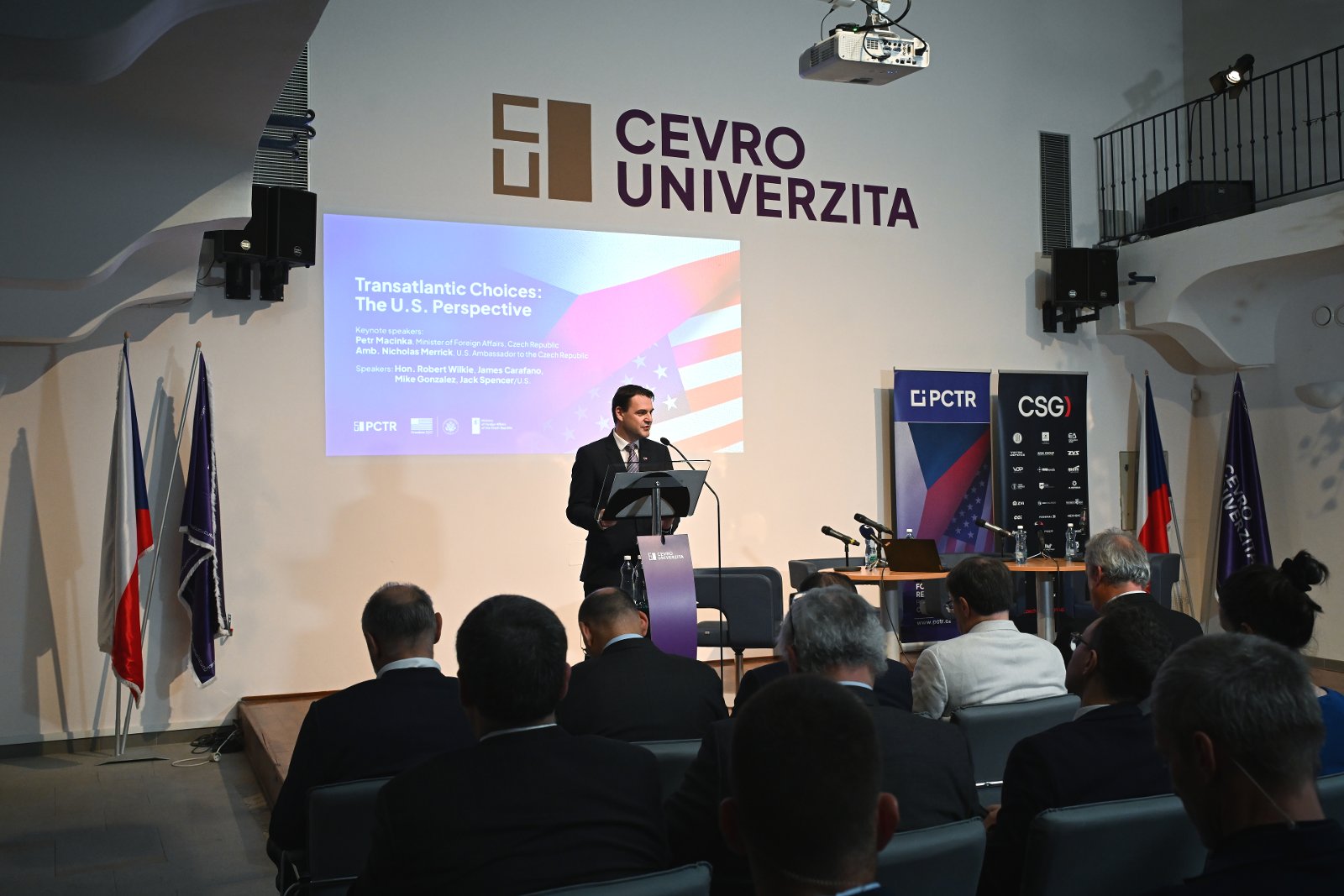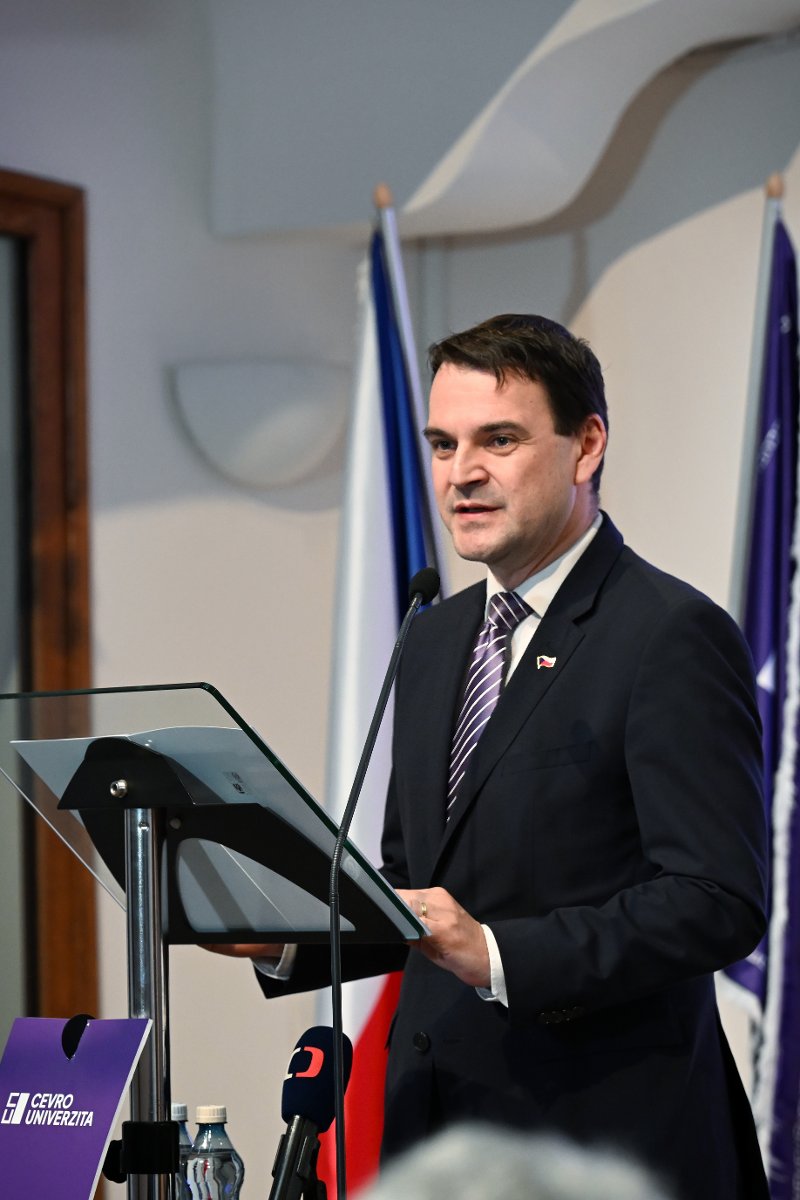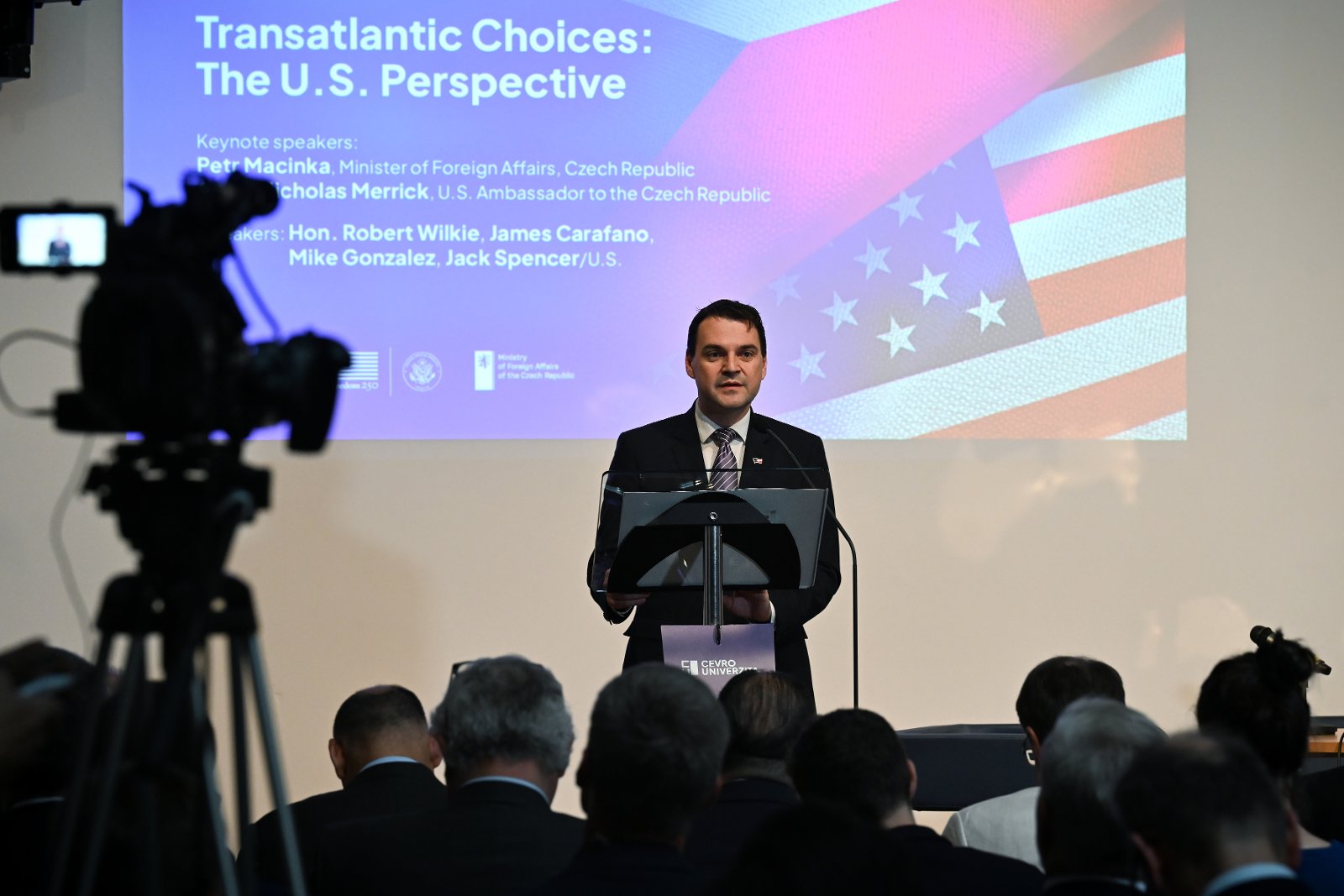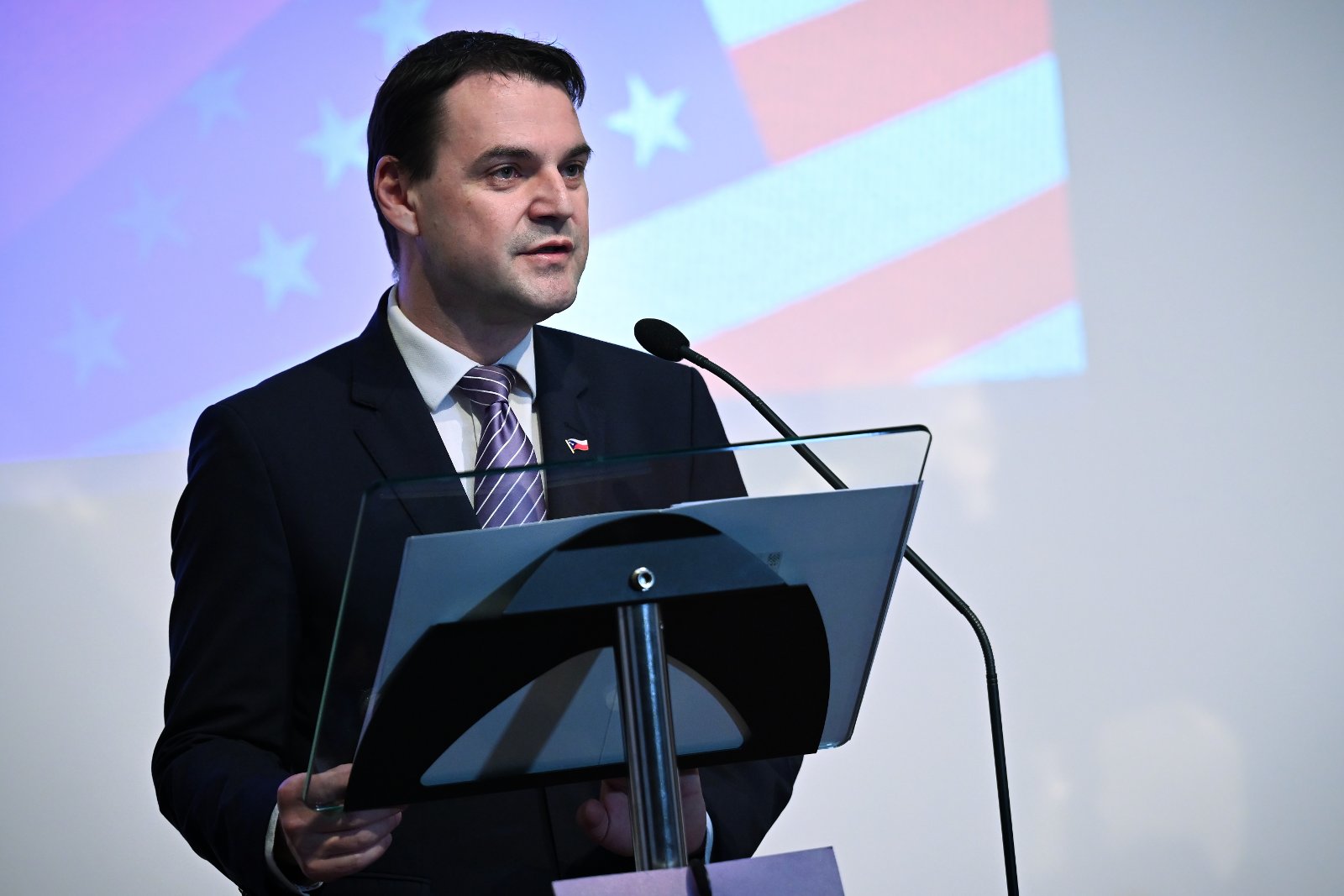
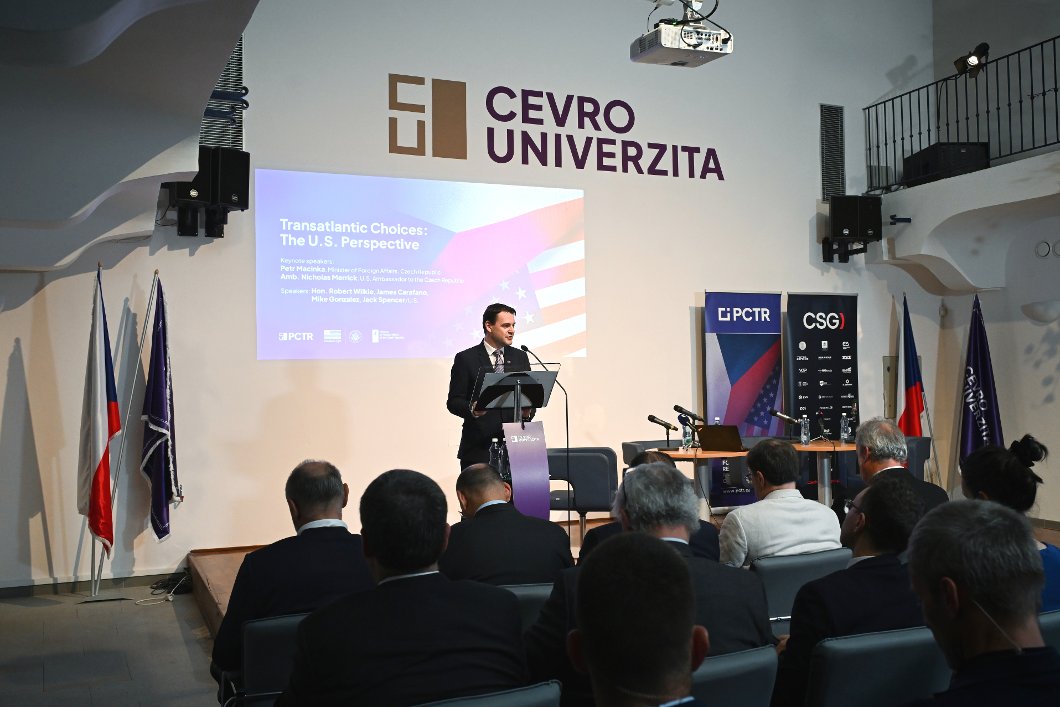




“The West Needs a Return to Realism and Responsibility,” Says Minister Macinka at CEVRO Institute
03.06.2026 / 12:09 | Aktualizováno: 03.06.2026 / 16:00
Prague, June 3, 2026
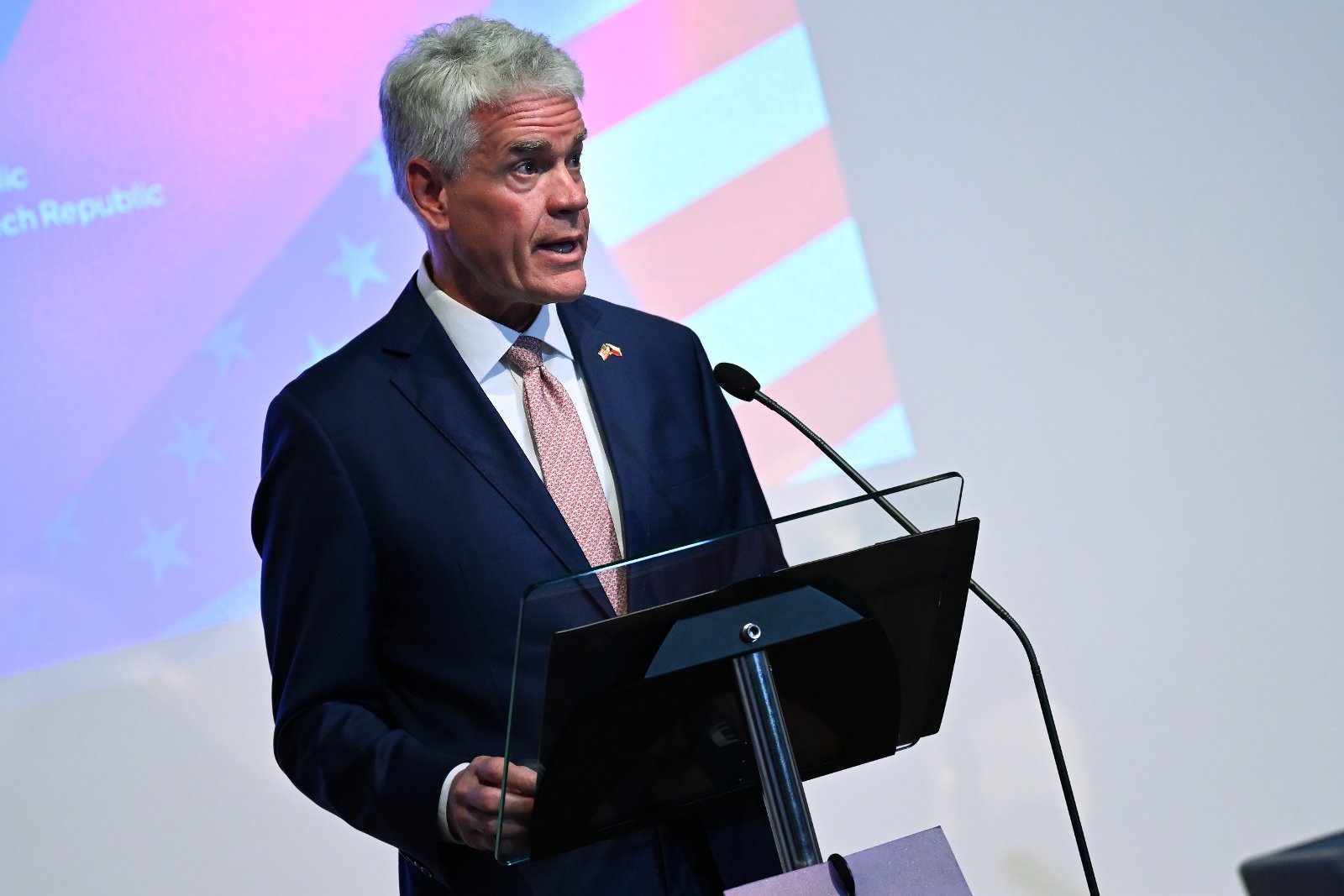
Mr. Ambassador, ladies and gentlemen,
Many thanks to the Prague Center for Transatlantic Relations and the Heritage Foundation for organizing today's discussion.
I should confess that although I have not been here for quite some time, I have probably spent more hours in this building than most of you.
We are gathered here at CEVRO University, my alma mater. I still remember the stress of exam periods, and above all Professor Kříž and his famous course on the History of International Politics, a course that almost everyone failed on their first attempt — I am pleased to say that I did not.
When we speak about transatlantic relations today, most discussions focus on defence budgets, military capabilities, or the future of NATO.
In fact, those were among the very first topics raised when a delegation from the Heritage Foundation, led by James Carafano, whom I am pleased to see here today, visited me at the Ministry of Foreign Affairs a few months ago.
My response at the time was that these are undoubtedly important issues.
But I also suggested that the debate we should be having is in fact much deeper. And I jokingly added that I would have expected the very first remark from a representative of the famous Heritage Foundation to be a little more ideological.
I regret that I cannot stay longer, as I will be leaving shortly for the OECD Ministerial Meeting in Paris. Nevertheless, allow me to share a few thoughts on today's topic.
I believe that our discussion should not be limited to the future of the transatlantic partnership alone.
What is ultimately at stake is the future of the West itself.
After the end of the Cold War, we entered a period of extraordinary optimism. Many believed that democracy would gradually spread across the globe.
That globalization would overcome geopolitical rivalry. That economic interdependence would replace power politics. That history was moving in a single direction and that the Western model would eventually be adopted by everyone.
Today, we know that this is not the case.
The world is not unipolar. It is not homogeneous. And it is certainly not moving towards a single universal political model.
China did not become a Western democracy. Russia did not become part of the liberal international order.
Geopolitical competition did not disappear. On the contrary, it has returned with full force.
Whatever we may hear from various quarters, one thing should be stated clearly: the current American administration did not create this reality. It simply had the courage to describe it more openly and more directly than many others.
And that is precisely why it is important for Europe to understand this change.
The United States is reassessing its global priorities. It is devoting increasing attention to the Indo-Pacific region and expects its European allies to assume greater responsibility for developments in their own neighbourhood.
And I believe it should be said openly: this expectation is legitimate.
It does not represent a call for a diminished American presence in Europe. It points towards a more balanced transatlantic partnership.
One that moves beyond the asymmetries of the past and towards a relationship between two mature partners, in which both—Europe and the United States—assume their fair share of responsibility.
Ladies and gentlemen,
Security is not the only issue that will determine the future of the West. Alongside security challenges, we also face cultural, societal and political challenges.
That is why Vice President J.D. Vance's speech at last year's Munich Security Conference attracted so much attention.
Many European politicians disagreed with his remarks. Some of his conclusions were not easy to hear in Europe.
I consider his speech one of the most important contributions to the European debate in recent years.
I believe it would be a mistake to dismiss his arguments simply because they were expressed openly and without the filters of political correctness.
J.D. Vance was not really speaking about America. He was describing the condition of Western democracies.
Vice President Vance reminded us of something we should remember more often: the strength of democracy lies not only in its institutions. It also lies in the trust of citizens, in free public debate, and in the willingness of political elites to listen to society.
That is an idea that deserves attention on this side of the Atlantic as well.
Too often in recent years, legitimate concerns expressed by citizens have been dismissed or belittled.
Too often we have seen efforts to explain to people why they are wrong rather than trying to understand why they think the way they do.
That is not a path towards strengthening democracy. It is a path towards growing distrust between citizens and institutions.
We can see this clearly in the debate on migration.
Europe is now facing the consequences of policy failures accumulated over many years. Instead of an open discussion about the security, social and cultural consequences of mass migration,
public debate was too often dominated by moralising attitudes and by the assumption that any critical discussion was somehow a sign of intolerance.
Millions of Europeans warned about problems that today can no longer be ignored.
Yet European democracy became trapped in the belief that citizens could somehow be educated out of opinions they genuinely hold.
It is a telling reflection on Europe that some of the questions pushed to the margins of public debate for so many years were articulated so forcefully only when voiced by the Vice President of the United States.
And we see a similarly distorted debate in Europe when it comes to climate and energy policy.
Of course no reasonable person questions the importance of protecting the environment.
The real question is whether some policies genuinely protect the environment, or whether they primarily weaken the economic and industrial foundations of Western societies.
If Europe shuts down its own industries while production simply moves elsewhere, we are not protecting the climate.
If rising energy prices undermine our competitiveness, we are not protecting Europe's future.
And if citizens begin to feel that their standard of living is being sacrificed in pursuit of abstract objectives, we undermine trust in democratic institutions.
The environmental policies we need must be compatible with prosperity, energy security and industrial strength.
This is precisely where I see growing opportunities for dialogue between conservative and centre-right forces on both sides of the Atlantic.
Our common objective should be a return to realism.
A return to responsibility.
And a return to the conviction that politics should serve citizens — not that citizens should serve political projects or social experiments.
I believe that Central Europe has a unique contribution to make to this debate.
Our nations have direct historical experience with totalitarian ideologies.
We know how dangerous it can be when political projects become detached from the everyday reality of ordinary people.
We understand the importance of free speech.
We understand the importance of democratic legitimacy.
And we understand the importance of national responsibility.
Perhaps that is why so many people in Central Europe follow the debates taking place in the United States with such interest.
Not because we wish to imitate America.
But because we find ourselves asking many of the same questions in our own societies.
Ladies and gentlemen,
The transatlantic partnership was not built solely on common interests. It was also built on common values.
On a belief in freedom.
On democratic legitimacy.
On responsibility towards our own citizens.
And on the conviction that an open and free society is stronger than a society built on conformity and fear of dissenting views.
The future of transatlantic relations therefore cannot be reduced to troop numbers or defence spending.
To reduce the transatlantic debate to those questions alone would be a mistake.
The future of transatlantic relations also depends on restoring confidence in Western civilisation itself.
On rebuilding trust between citizens and institutions.
On our willingness to engage in open debate about the challenges our societies actually face.
And on a partnership of free and self-confident allies prepared to assume greater responsibility for their own security, prosperity and future.
It is on that foundation that we can build a new chapter of the transatlantic partnership for the twenty-first century.
Thank you very much.