



First Incoming Mission of Vietnamese Wine Importers to the Moravian Wine Regions
26.08.2026 / 05:18 | Aktualizováno: 26.08.2026 / 05:28
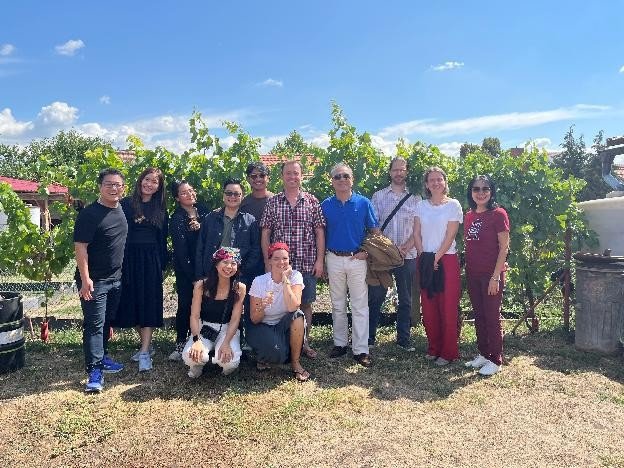
From 16 to 20 August 2026, the Ministry of Agriculture of the Czech Republic, in cooperation with the Embassy of the Czech Republic in Hanoi, organized the first-ever incoming mission of Vietnamese wine importers, sommeliers, and wine traders focused exclusively on Moravian wine production. During the four-day programme, six representatives of Vietnam's wine and gastronomy sectors visited all four Moravian wine sub-regions: Znojmo, Mikulov, Velké Pavlovice, and Slovácko.
Visits to Wine Regions and Meetings with Winemakers
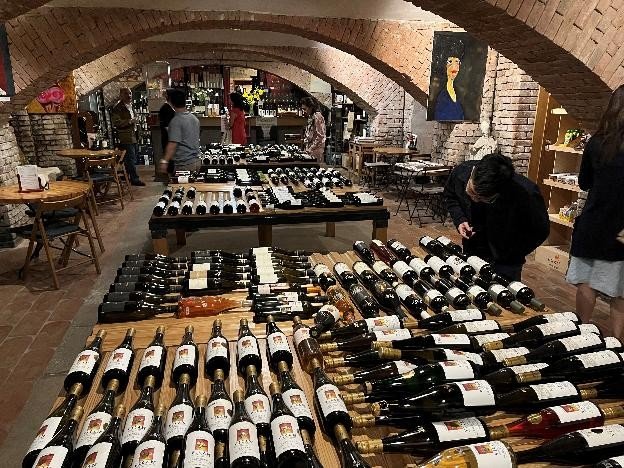
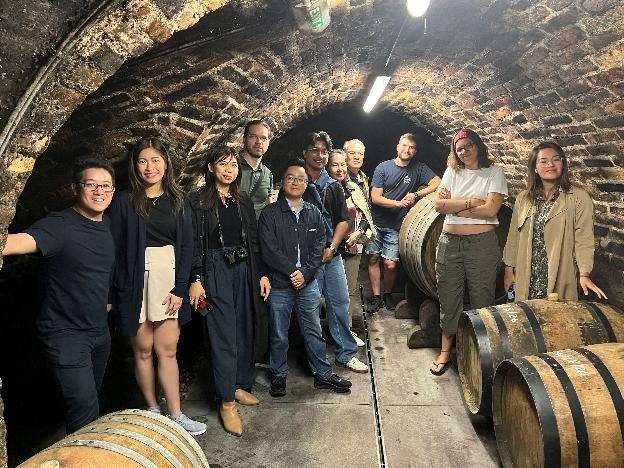
The mission began in Brno and continued to Valtice, where participants attended a professional programme at the National Wine Centre and visited the Salon of Wines of the Czech Republic, a permanent tasting exhibition showcasing the 100 best Czech and Moravian wines, housed in the historic cellars of Valtice Castle. Valtice is rightly regarded as the wine capital of the Czech Republic and is home to several institutions that help shape the future of Czech viticulture.
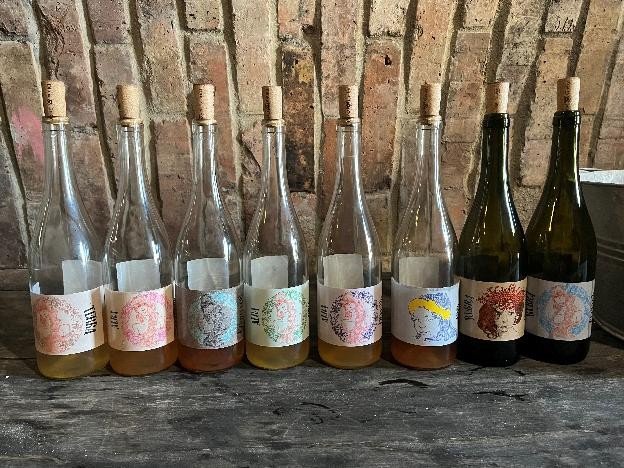
The Vietnamese delegation then travelled to Mutěnice, Velké Bílovice, Mikulčice, Kobylí, Hodonice, Mikulov, and Znojmo, visiting a number of leading Czech wineries, including Sonberk, Thaya, and Vican, as well as several smaller family-run and natural wine producers such as Dlouhé Grefty, Herzán, Marada, Osička, Plchut, Štěpánek, Vajčner, and Vincúr. The programme was designed to present the full spectrum of the Moravian wine sector, from modern, technologically advanced wineries to authentic natural wine producers.
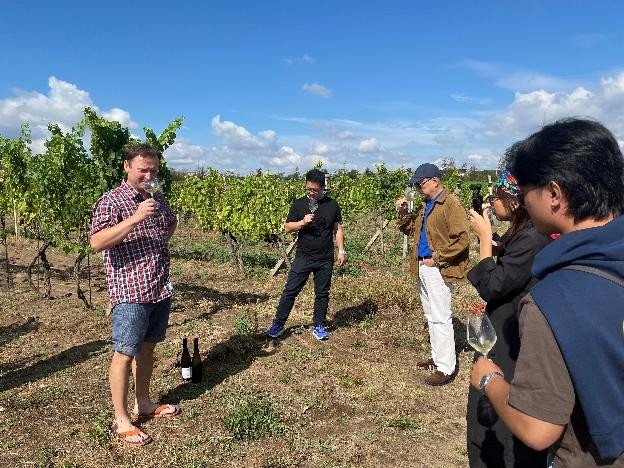
Personal meetings with winemakers in their vineyards and cellars proved to be among the highlights of the entire mission. The Vietnamese visitors were particularly impressed by the fact that most winemakers are both vineyard owners and wine producers. Seeing winemakers at work among the vines, barrels, and presses offered a vivid picture of winemaking as a craft rooted in personal commitment, tradition, and a deep connection to the land.
Pálava and the Uniqueness of Moravian Terroir
Considerable attention was also given to the Pálava grape variety. Developed in Moravia through a cross between Gewürztraminer and Müller-Thurgau, it was bred in the village of Perná beneath the slopes of the Pálava Hills, from which it takes its name. Its aromatic profile, featuring notes of lychee, mandarin, vanilla, and nutmeg, makes Pálava one of the most distinctive varieties of Moravian viticulture.
Participants were also introduced to the unique character of Moravian terroir. Moravian vineyards are located around the 49th parallel, sharing the same latitude as the renowned Champagne region of France and some of Germany's finest wine-growing areas. The combination of warm days and cool nights during grape ripening gives local wines their characteristic freshness, pronounced aromatics, and balanced acidity.
The character of Moravian wines is shaped not only by climate but also by the remarkable diversity of soils across the region. Limestone soils around the Pálava Hills, gravel and loess subsoils in the Mikulov area, and the sandy and clay-rich soils found in other Moravian sub-regions all contribute to the distinctive expression and flavour profile of the wines.
Export Potential of Moravian Wines
Although the quality of Moravian wines has steadily improved and they regularly receive awards at international competitions, less than 5% of total production is exported. At a time when the European wine sector faces overproduction and challenging conditions in domestic markets, foreign markets represent an important opportunity for future growth.
Vietnam represents a promising market for Moravian wines. The country's growing middle class, developing gastronomy sector, and increasing interest in high-quality European wines create opportunities for new business partnerships. At the same time, it is a demanding market, where producers must compete with wines from France, Chile, and Australia, while also ensuring proper storage in air-conditioned facilities due to the tropical climate and high temperatures prevailing throughout most of the year.
Moravian wines have already demonstrated their ability to succeed in demanding international markets. One notable example is winemaker Milan Nestarec, whose natural wines have gained international recognition and become among the most sought-after Czech wine brands abroad. His success reflects the growing global demand for authentic wines with a clear origin and a compelling personal story.
The mission resulted in the establishment of numerous new business contacts between Czech winemakers and Vietnamese importers. The personal stories and traditions that constitute one of Moravian winemaking's greatest strengths significantly supported the promotion of Moravian wines in Vietnam and are opening new opportunities for their presence in the local market.
Galleries
Wine Tour Moravia 2026