
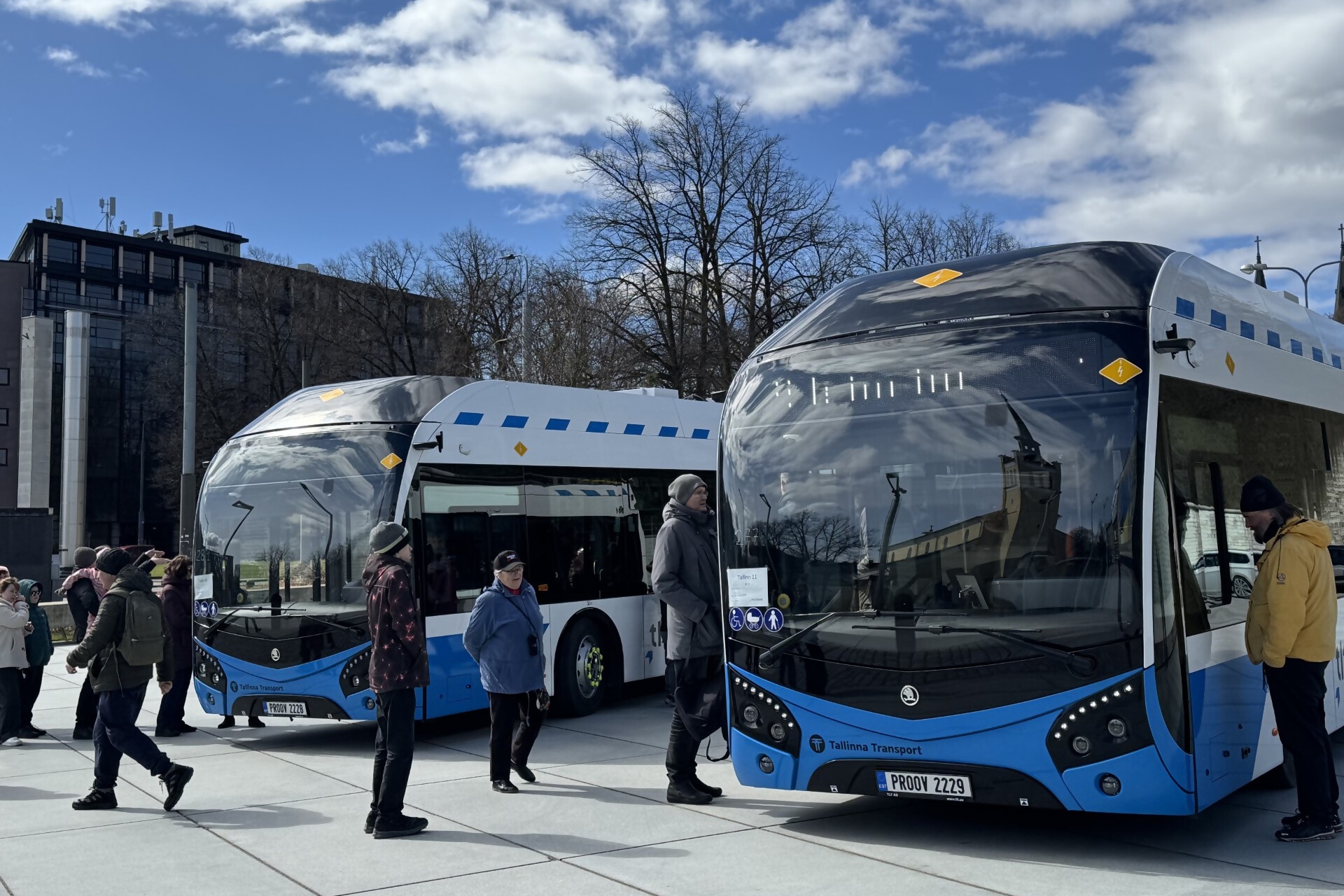





Škoda Trolleybuses showcased on Tallinn’s Freedom Square last weekend
27.04.2026 / 16:57 | Aktualizováno: 27.04.2026 / 16:59
Last Sunday, on April 26th, Tallinn showcased its newly acquired hybrid Škoda trolleybuses to the public for the first time on Freedom Square. While they are only scheduled to run the streets from July 2026 onwards, last weekend was an opportunity for the city’s residents to view and pre-emptively inquire about the brand new, environmentally friendly trolleybus – a mode of transportation the city is rediscovering after a phase-out in 2024 due to the previous vehicles losing reliability due to their old age.
After the capital removed its old trolleybuses from the streets in late 2024, a public procurement was quickly announced in early 2025. The final round was won by the Czech company Škoda Electric, among other things, due to its spacious design, accessibility features, environmental friendliness, technological advantages, and reliability. But perhaps the main added value was the battery capacity, allowing an autonomous range of up to 25 kilometres. 40 new models were acquired, of which 22 are 18m long with a capacity for 120 passengers, and 18 are 12m long with a 69 passenger capacity. Škoda Electric benefited from a deal worth €30M, and the city retained the right to order up to an additional 30 trolleybuses.
“The Tallinn project represents a significant milestone in the development of modern electric public transport,” says Karel Majer, Chairman of the Board of Directors of Škoda Electric. “The new generation of battery trolleybuses combines the advantages of classic trolleybus systems with the flexibility of battery operation, which gives cities greater freedom in route planning and daily operations. This year, we will deliver a total of 40 new battery trolleybuses to the city of Tallinn, which can travel up to 25 kilometers without a catenary wire. This is a solution suitable even for historic or densely built-up city centers.”
When asking city government advisor Mark Jefimov for the most remarkable thing about the new Škoda vehicles, he also noted their battery capacity, which has allowed to significantly limit the need for further investments in infrastructure and maintenance. “We will be able to restore all trolleybus lines, which are now serviced by buses, and replace the line 72 with the electric trolley service. All service numbers will remain the same, though, so that we may benefit from additional flexibility in the event of necessary maintenance or unavailability of certain vehicles in the future. Additionally, as the Škoda trolleybuses can run 25 kilometres on battery power, we did have to do some reconstruction on the power lines, but more importantly, we were rather able to get rid of most of them around the city centre. People were previously complaining about them being aesthetically unpleasing,” said Mark.
“We see the order for Tallinn as proof of trust in the technical sophistication and quality of Czech industry. It is not just about the supply of vehicles, but a comprehensive and long-term solution for sustainable urban mobility, including service, maintenance and modernization of the infrastructure,” emphasizes Karel Majer from Škoda Electric company.