Making of Places: Participation for Everyone
24.09.2025 / 06:26 | Aktualizováno: 16.12.2025 / 09:16
Connecting Experts on Participatory City-Making for a Sustainable Future
On September 18, 2025, the Consulate General of Czechia in Hong Kong held a professional conference titled "Making of Places: Participation for Everyone". The event took place at the inspiring venue of Wyndham Social and followed up on the successful exchange of experiences in the SDG in cooperation with the Association for Social Responsibility (SDG awards, ESG reporting, AI for children, etc.). This year, it focused on the key theme of participatory public space creation and involving communities in city planning.
The conference aimed to build a bridge between experts from Czechia and Hong Kong, to present best practices and innovative tools, and to discuss the challenges involved in genuinely engaging citizens in decision-making processes. The event was funded by the Ministry of Foreign Affairs of Czechia as part of a project supporting the Sustainable Development Goals. The main partner of the event was the company Architecture Commons, but also the Social Enterprise Summit; both institutions were partners in moderating the event. In addition to the main seminar on September 18, a participatory workshop was held the following day in cooperation with Architecture Commons.
Expert Discussions: From Strategies to Practice
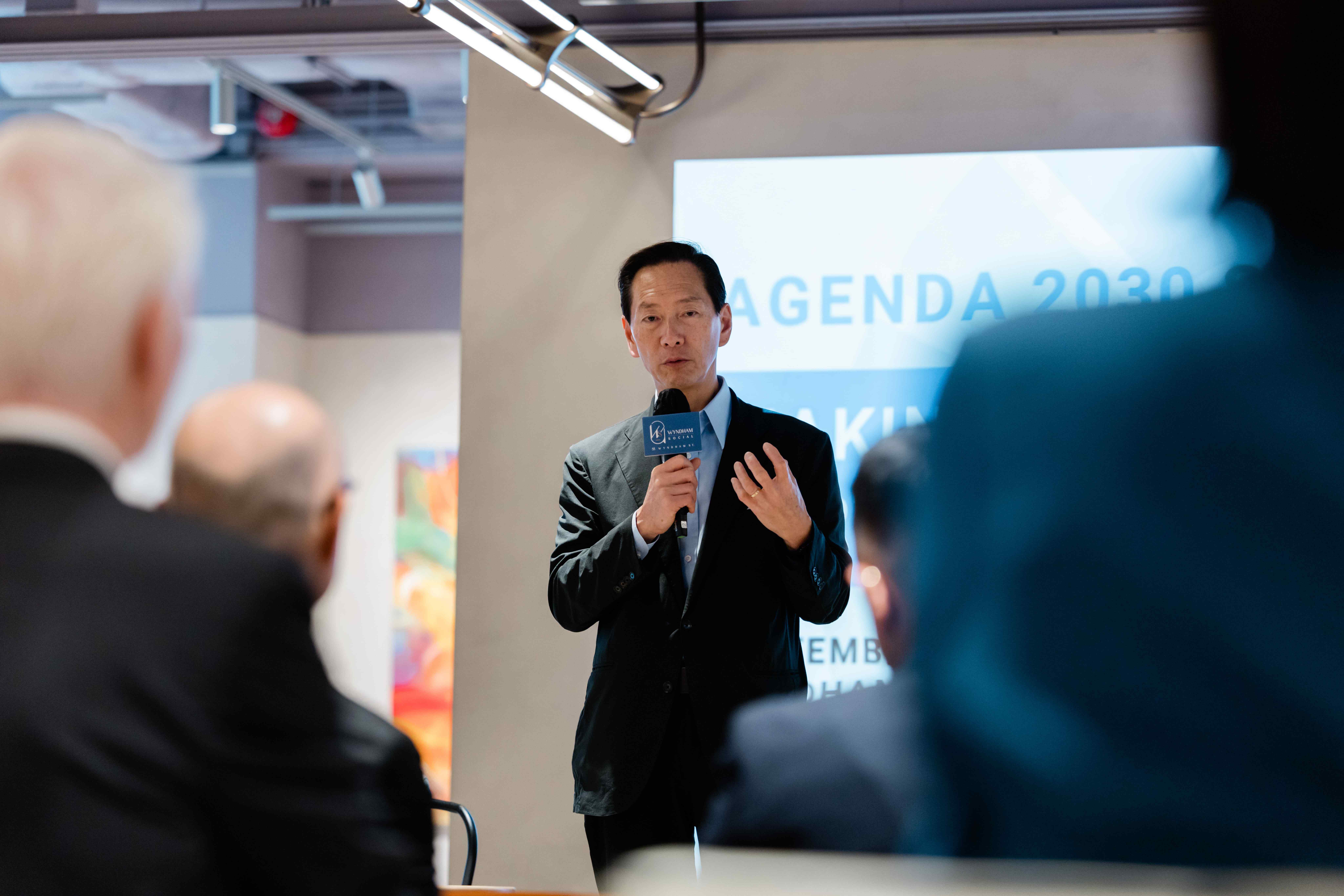
The opening remarks were delivered by key partners. After a welcome by the Consul General Klára Jurčová, Ambassador Harvey Rouse from the EU Office to Hong Kong and Macao spoke, emphasizing the EU's role as a leader in the green transition and the importance of translating policies to the local level. This was followed by a keynote speech by Bernard Chan from Our Hong Kong Foundation.

The first block, moderated by Eric Ho from Architecture Commons, focused on frameworks and implementation. Connecting online, Věra Karin Brázová from the Czech Ministry of Regional Development presented national strategies and methodological guidelines through which the Czech Republic supports participation as a cornerstone of sustainable urban development. This was followed by concrete examples from practice: Eva Gregorová and Linda Seitlerová from the unique Participation Department of Brno City Municipality presented in detail the wide range of tools that Brno offers its citizens – from participatory budgeting and civic proposals to participation in schools. Providing the Hong Kong perspective, Donald Choi from the Urban Renewal Authority then spoke. Using specific examples of urban renewal, he outlined its particular challenges in a densely populated metropolis and emphasized the necessity of long-term, open communication and the use of technology to engage all groups of residents.
The second block, moderated by Lawrence Leung from the Hong Kong Social Entrepreneurship Forum, looked into the future of placemaking. Milan Brlík from the Prague Institute of Planning and Development and Jan Rachunek from the Prague 1 Municipal District Office described the complexity of coordinating 57 city districts and shared valuable lessons from practice. They emphasized how crucial it is to work with quality data and to be able to lead meaningful dialogue among all involved parties. Van Doan from the Czech company Blueberry PoP shared practical experience with digital tools for participation, drawing on her experience with projects all over the world. The perspective of the private sector and philanthropy was represented by Warren Luk from the DBS Foundation, who used specific community centre projects to show how crucial the connection between "hardware" (the physical space) and "software" (community activities and relationships) is for a place's success. The conclusion belonged to Renata Klánová, an expert on participation and communication, who introduced a case study from the Czech Republic to demonstrate how transparent communication and community involvement can change relationships and build trust, even in commercial-developer projects.
Common Insights and Future Challenges
Despite the differences between Hong Kong and Czech cities, the conference clearly demonstrated that the key to successful participation is mutual trust between citizens, public authorities, and developers. This trust is built over the long term through open communication and active listening. This process therefore requires time and patience, as it is not a one-off event but a continuous dialogue. Technology can significantly support and streamline this dialogue, but it must be thoughtfully combined with personal contact to ensure everyone can participate. The goal is not to satisfy the loudest voices, but to find a fair compromise that considers the needs of different groups. The involvement of the private sector is crucial in this process. For developers, well-managed public participation becomes a tool to prevent conflicts with the community (such as the NIMBY effect) and unnecessary delays, making it a good investment for the future.
The final event was a participatory workshop organized by Architecture Commons in cooperation with the Consulate General of the Czech Republic in Hong Kong on October 19, at the premises of Habyt Bridges (Community Room), on the topic of Project Staunton – Cultivating the Culture of a Place. The seminar, in a participatory format and with the participation of an expert from the Czech Republic, Renata Klánová, discussed possibilities for cooperation on the development of a selected area with various stakeholders and introduced a Community Asset Map prepared by the Czech company Blueberry POP.