Council of Europe
The Council of Europe is the largest pan-european human rights organization.
It was founded in 1949, and its primary goal is the protection of human rights, pluralist democracy, and the rule of law.
The organization focuses on promoting the development of European cultural identity and diversity. It actively seeks solutions to the challenges that European society faces, such as discrimination against minorities, xenophobia, environmental protection, organized crime, etc. The Council of Europe helps consolidate democratic stability in Europe by supporting political, legislative, and constitutional reforms.
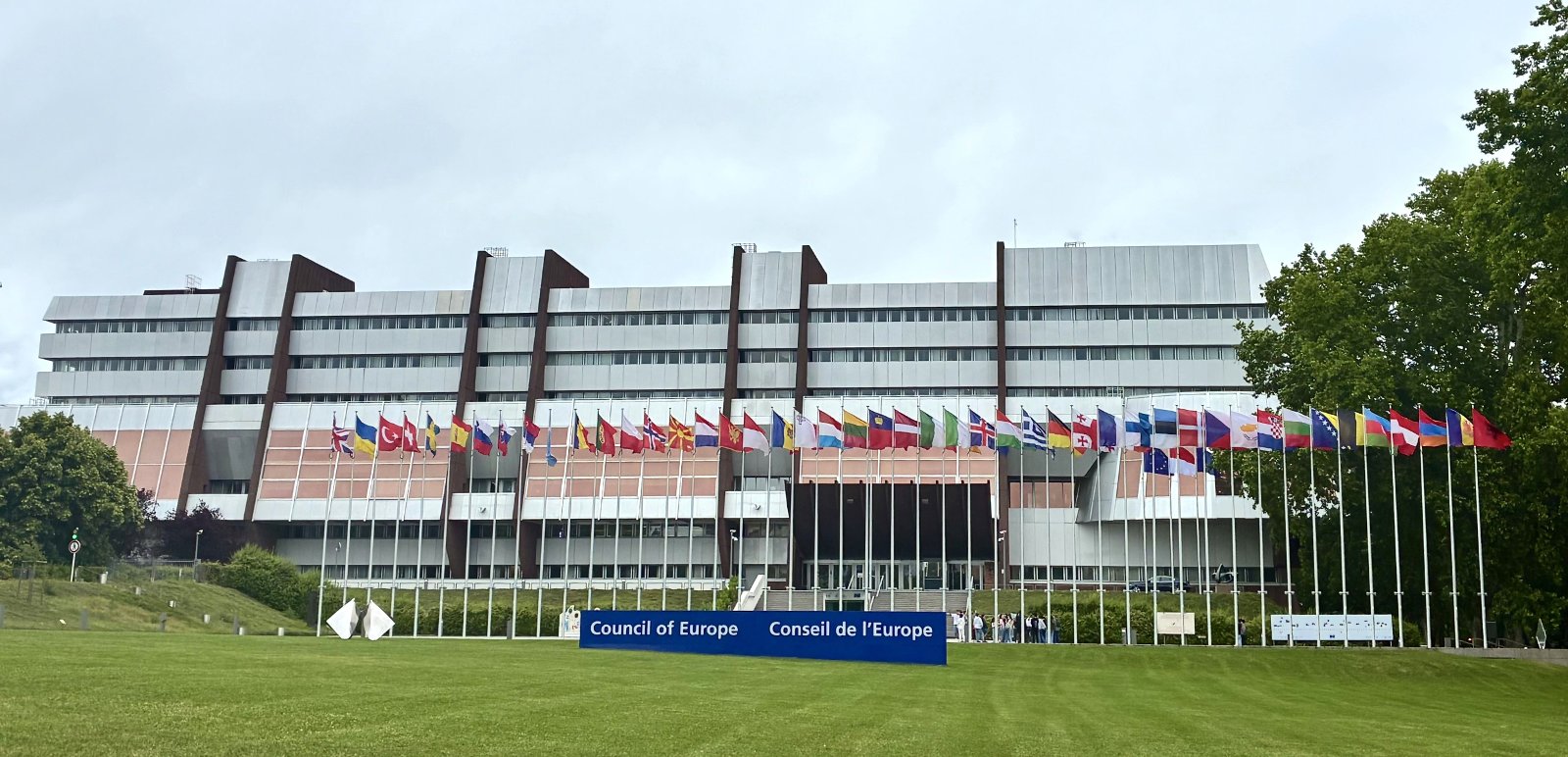
Any European state may become a member of the Council of Europe, provided it accepts the principle of the rule of law and guarantees human rights and fundamental freedoms to everyone within its jurisdiction. The organization currently is composed of 46 member States. The Czech Republic joined the Council of Europe in 1991 as part of the Czech and Slovak Federative Republic (CSFR). However, following the dissolution of the CSFR, this membership terminated and both the Czech and Slovak Republics had to apply for re-admission and became members in their own right in 1993.
The organization is headquartered in the Alsatian capital, Strasbourg. Strasbourg is also home to the European Court of Human Rights, which is part of the Council of Europe. Moreover, it is the regular meeting place of the European Parliament, which is, however, an institution of the European Union.
The Council of Europe covers all key challenges faced by European society, with the exception of matters relating to national defence. Its work program includes activities in the following areas: human rights, media, legal cooperation, social and economic issues, health, education, culture, sport, youth, local democracy and cross-border cooperation, environment, and regional planning.
The Council of Europe is funded by the member States, with contributions determined based on their population and GDP.
The Committee of Ministers of the Council of Europe is the organization's main decision making body. Its members are the Ministers for Foreign Affairs of all member States, who meet at least once a year. Between these official ministerial sessions, their functions are carried out by the Ministers' Deputies, composed of Permanent Representatives (Ambassadors), who typically meet once a week.
The Parliamentary Assembly of the Council of Europe (PACE) is a deliberative body whose members are appointed by the national parliaments of the member States. The Parliamentary Assembly elects the Secretary General and his deputy, the Commissioner for Human Rights, the individual judges of the European Court of Human Rights, and others.
The Congress of Local and Regional Authorities is a consultative body in which these authorities from the member States are represented. Its task is to promote and monitor the functioning of democracy at local and regional level and to ensure the implementation of the European Charter of Local Self‑Government.
The Council of Europe regularly organizes specialized ministerial conferences (ministers of justice, education, health, environment, labour, culture, etc.). These conferences analyse the main challenges facing the respective sectors and strengthen cooperation between ministries dealing with similar issues in the member States. The outcomes of these conferences are typically joint projects and proposals to include specific activities in the Council of Europe's work program.
The Secretariat of the Council of Europe consists of approximately 1,300 permanent staff members from the 46 member States. It is headed by the Secretary General – since 2024, Alain Berset (Switzerland) – who is elected for a five-year term. His role involves managing the organization internally and representing it before third states and international organizations.
The Council of Europe Development Bank (CEB) is also affiliated with the organization and falls under its supreme authority. Headquartered in Paris and founded in 1956, the CEB was known as the Council of Europe Social Development Fund until November 1, 1999. It contributes to social investment programs according to its own criteria and provides loans to member States or financial institutions approved by their governments. The Bank bases its activities on subscribed capital and its own available funds. It is legally and financially autonomous and serves as the primary instrument of the solidarity policy developed by the Council of Europe. It currently has 43 members; the Czech Republic has been a member since February 12, 1999.
The CEB's main bodies are the Governing Board, the Administrative Council, the Governor, and the Auditing Board. The Governing Board counts among its members the Ambassador and Permanent Representative of the Czech Republic to the Council of Europe, Kristýna Najmanová, LL.M.
The work of the Council of Europe results, above all, in conventions and recommendations, the implementation of which leads to the harmonization of their domestic legislation with the standards set by the Council of Europe and to the approximation of legal orders in the shared European legal space.
The official languages of the Council of Europe are English and French. The Parliamentary Assembly also uses German, Italian, and several other languages as working languages.