
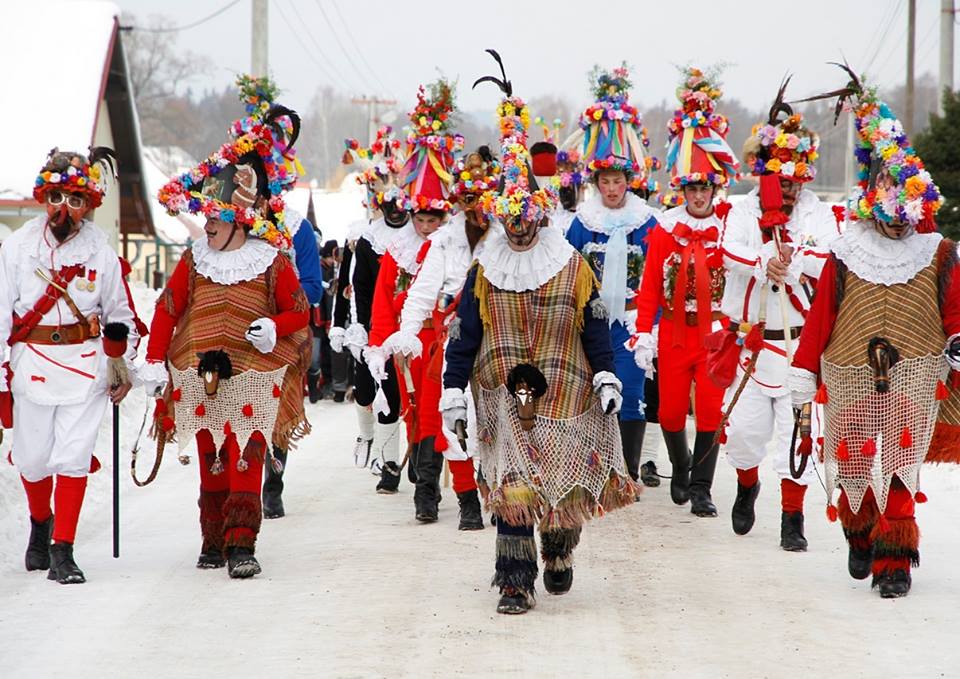


Invitation to an opening of an exhibition „Shrovetide door-to-door processions and masks in the villages of the Hlinecko area, Czech Republic“
09.02.2016 / 15:52 | Aktualizováno: 09.02.2016 / 15:54
(This article expired 18.02.2016 / 01:00.)
When: on 17 February, Wednesday, at 17.30 o´clock
Where: at the gallery of Lithuanian National Commission for UNESCO (Šv. Jono g. 11, LT-01123 Vilnius)
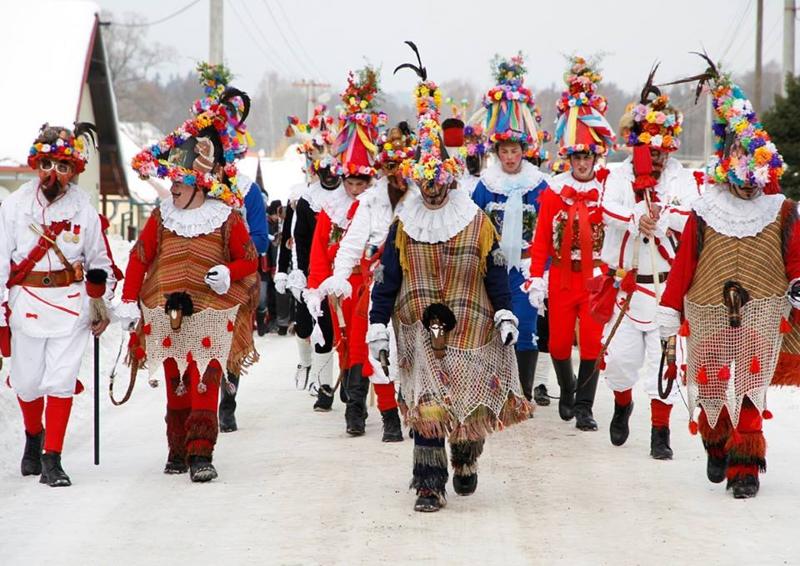
The Shrovetide processions take place in the town of Hlinsko and six nearby villages in the Hlinecko area of Eastern Bohemia in the Czech Republic. This popular carnival custom takes place at the end of winter, during Shrovetide - the period just before the Christian Lent.
Village men and boys, disguised in masks that depict traditional characters (red masks for boys and black for married men), go from door to door around the village, accompanied by a brass band. The procession stops at each house and four of the men perform a ritual dance, with the householders permission, to secure a rich harvest and prosperity for the family. In return, the masked men receive treats and collect a fee. A symbolic Killing of the Mare ritual takes place after the last house has been visited, during which a mare is condemned for its alleged sins and a humorous and topical testament is read out. Following the execution the mare is revived with alcohol, signalling the commencement of a dance as the masks frolic with onlookers. The Shrovetide processions - banned in turn by the Catholic Church in the eighteenth and nineteenth centuries and by the socialist government in the twentieth century - play an important role in securing cohesion within the village community. Young people and children help with the preparations and parents make copies of traditional masks for their sons.
Shrovetide