
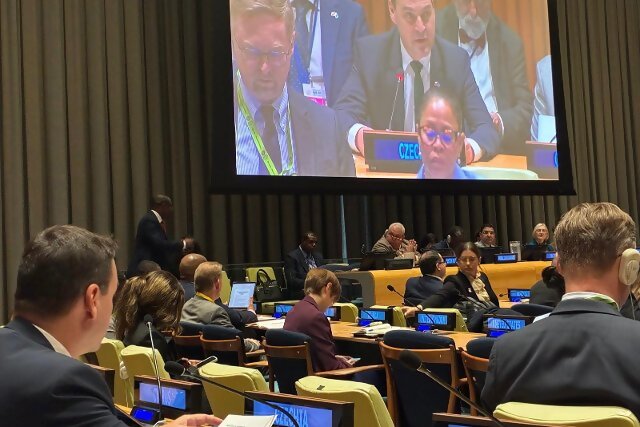




“Peace can be supported from abroad. But peace cannot be imported,” said Minister at the UN Peacebuilding Commission
28.09.2026 / 17:32 | Aktualizováno: 30.09.2026 / 17:34
New York, September 24, 2026
Mr. Chair, dear Nasser,
Excellencies, dear colleagues,
We spend a great deal of time in this building discussing how to end wars. And rightly so.
But perhaps we spend less time asking the question that comes next:
What happens the day after a war ends?
Because ending a war and building peace are not the same thing.
A ceasefire can stop the fighting. A peace agreement can bring a conflict to an end.
But neither, by itself, can make people trust their state, give young people a reason to see their future at home, or ensure that the next disagreement in society is resolved without violence.
And this is where peacebuilding begins.
Peace can be supported from abroad. We can help finance it. Sometimes, we can even help negotiate it.
But peace cannot be imported.
National ownership, therefore, is more than a technical principle of international cooperation.
It is also an expression of humility.
It reminds us that there are limits to what the international community can do for others.
We can help build institutions. We cannot give them the trust of their people.
We can provide resources. We cannot take responsibility in their place.
We can support reconciliation. We cannot reconcile a society on its behalf.
My own country learned something similar after 1989: others could help us, but nobody could make our transformation happen for us.
And functioning institutions alone are not enough.
Peace must also offer people a future.
Jobs. Opportunity. The freedom to start a business, to invest, and to build something of their own.
Because someone who sees no future in their own country will not consider peace a success simply because an agreement has been signed.
Perhaps we should measure our own success accordingly.
Not by how much money we spend.
Not by how many programmes we create.
But by what remains after us.
Stronger institutions. A functioning economy. A society capable of taking responsibility for its own future.
We should measure success not by how much assistance we provide, but by how much national capacity we leave behind.
Because the true success of peacebuilding is not a country in which the international community must remain forever.
It is a country that, one day, no longer needs us.
Thank you.