




Interview with the Czech ambassador in Luxembourg for Paperjam: “A living diplomacy across all levels of society”
20.01.2026 / 13:59 | Aktualizováno: 20.01.2026 / 14:04
Written by Louise Braibant, Paperjam
Barbara Karpetová, ambassador of the Czech Republic to Luxembourg, draws motivation and inspiration from the successful shared history of Bohemia and Luxembourg.
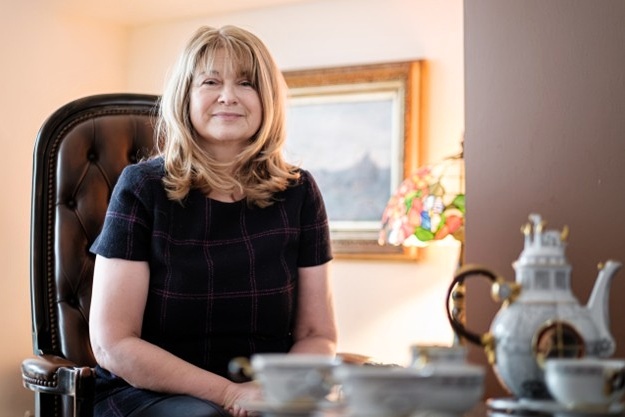
Ambassador of the Czech Republic to Luxembourg since February 2025, Barbara Karpetová sees Luxembourg not only as a close partner, but also as a source of inspiration. Drawing on a shared history that dates back to the Luxembourg dynasty in Bohemia, as well as concrete cooperation today—from culture and finance to support for Ukraine —, she sets out a vision of diplomacy as a living craft, rooted in European values and carried by all levels of society.
Could you tell us about your professional background?
Barbara Karpetová - “I have concentrated much of my career on what is called public diplomacy, as well as—this being my second area of expertise—defence. It is an unusual combination, coming from nearly opposite ends of diplomacy. Public diplomacy is here when anything else is not working anymore. And anything not working anymore means already armed conflict. It is important for you to understand from which perspectives I am looking at relations. There are many angles in diplomacy. I would compare it to medical science. Imagine I am a general practitioner, I would talk about certain issues from my point of view. If I am a paediatrician or a cardio surgeon, I would talk about the same issues from a very different point of view.
How is the relationship between the Czech Republic and Luxembourg?
“When you talk about whether relations are good or not, you usually look at several levels. On the top level, there is the exchange of high-level visits. Our president visited Luxembourg for a first state visit almost two years ago. They were welcomed by the previous ducal couple […] and I am sure they found a lot of common points in their view of today’s world. Last November, there was a huge project initiated at the time of the presidential visit: the Biennale of Arts and Crafts in Luxembourg, under the auspices of Grand Duchess Stéphanie and the Czech President, with the Czech Republic as country of honour. It was one of the most significant events of last year and attracted 13,000 visitors. The Biennale brought together people who would not normally meet. Participants from the sister-city project between Vianden and Pilsen, particularly the city of Vianden, were actively involved, alongside the artists, gallery owners, designers and all the other organisers working together on that regional level.
It is a living diplomacy. All levels of society are actively involved. The diplomatic relations between Luxembourg and the Czech Republic exist on all those levels. And that is, I would say, the ultimate goal of diplomacy.
What are your priorities in Luxembourg as the ambassador of the Czech Republic?
“My primary mission is to build Czech-Luxembourg relations. Being in Luxembourg obviously means that we are also very much involved in the European issues. The mission is to cultivate relations and bring forward project ideas that support all levels of diplomacy—you can call it craftsmanship—should it be on the political level, on the economic level, cultural or educational level. That is my idea of, let’s call it, proper diplomacy. If there is something where we can join forces and it helps either our country or yours, or European or world issues—this is how I see the right diplomacy working. You can call it a holistic approach.
Is this holistic approach common among ambassadors, or is it your personal interpretation of the role?
“Especially now, it is obviously my interpretation once we’re talking to each other. But I would say that in general, I would see ambassadors as the people who are supposed to have the holistic approach, because they are the heads of missions. They are the captains of the ship, and they need to bring together a variety of angles to steer the ship in the right direction. That is why we were appointed ambassadors, because there is confidence that we are able to do it.
The happiness and joyful approach to life is something Luxembourgish people know a lot about.
Why do you use “Bohemia” when referring to the Czech Republic?
“Bohemia is a Latin name associated with the medieval period. The country [Czech Republic] is in the very centre of Europe. You can imagine what it means. There were so many waves in Luxembourg’s history where the country was at the edge or already swollen by the bigger neighbour. We went through a very similar experience. In the 1200s, the country became very strong. Czech kings were not only deciding about their own fate, but very often about the fate of the neighbours.
This was made possible by natural resources such as silver, gold and iron, which allowed the country to become an opinion maker in the international issues. What is important for the Czech-Luxembourg relations is the Luxembourg dynasty on the Czech throne. After the Přemyslid dynasty ended because they didn’t have a son, one of the princesses married John the Blind. It looked strange at the time, because he wasn’t royalty, but it was a very wise decision because it was a huge motivation. John’s son, Charles IV, became not only a very influential Bohemian king, but a Roman Emperor.
Luxembourg stayed on the Czech throne for about 125 years. Charles IV is up to now the most beloved monarch and is called the father of the country. His father was Luxembourgish and his mother Czech. He was able to elevate Prague in so many ways that it profits from it up to now. He is seen as a role model and Luxembourg is a very important part of it. I wouldn’t even say part; it is half of it.
You mentioned that the glass companies play an important role in the Czech Republic. Why is that?
“First of all, the Czech Republic is really good at glassmaking. We are talking about quality and top design. The company I mentioned is Moser, it is world-famous and continues a very long tradition of glass making in Bohemia. Northern Bohemia is rich in minerals and specific sand used to produce high-quality glass, called crystal. Crystal is very hard and allows hand cutting. This is why Czech crystal is so special and sold all over the world. We presented a very special gift to the Ducal couple: a hand-cut glass vase and two flute glasses made by Moser masters, with the Grand Duke’s monogram.
Is this diplomacy? Well, surely is. The vase was meant for the Grand Duchess, for roses—Luxembourg is an absolutely glorious country when it comes to roses. Presents in diplomacy are usually meant to enhance, somehow, some type of idea. The idea is: you are very good at rose planting, and we present you a vase for those roses. Why flute glasses? Because Luxembourg is the best for the bubbly. It is a way of coming together. You join two things which are very special.
At a time when Europe is facing major geopolitical, security and economic challenges—particularly with the war in Ukraine—how can the relationship between the Czech Republic and Luxembourg play an important role?
“Both countries are members of Nato and of the European Union. We are currently in a situation where the world is trying to find a solution to what is going on, and Europe is one of the very important and active players in that process. Our major task as a diplomat, and one of the most important missions of diplomacy, is to find such a solution that the war, or the armed conflict, is not spread further on our continent. It is already in Europe, but we are trying as much as possible to solve it before it escalates further. Both countries have a huge responsibility to find a solution good enough for all parties involved. I am not talking just about Europe. I am talking about the United States, Russia, and most of all about Ukraine.
Do you have a concrete example of a partnership with Luxembourg regarding the war in Ukraine?
“Yes. There is a munitions initiative, initially launched by the Czech Republic as a means of support for Ukraine. From a public diplomacy point of view, another important initiative was spearheaded this year by the NGO LUkraine in cooperation with the Czech embassy. The aim was to inspire 12 very important diplomatic institutions to lead a one-year-long, open project, in support of Ukraine. We brought together ten different embassies, plus the European Commission and the European Parliament. Each month, one of the partners of this coalition will carry out a project in the field of public diplomacy. It can be a conference, a film screening, a theatrical performance, an ecumenical service, or a concert. […] In this way, we are demonstrating unity, solidarity and, obviously, support.
Luxembourg is internationally perceived as a financial hub. How can the Czech Republic benefit from that expertise?
“This is another project we spearheaded last year. In December, representatives from the biochemical institute of Professor Holý came to Luxembourg. Professor Holý is the renowned Czech scientist who discovered the drug used to treat Aids. A mission took place on 10 and 11 December, bringing together representatives from scientific, financial, business and educational institutions, with the aim to create a new financial fund. One such fund already exists in Luxembourg and manages the finance coming from the drug. The purpose of the mission was to bring people to Luxembourg, show them around, and create fertile soil for their willingness to continue managing the fund here.
Luxembourg has the professional expertise to manage and circulate that money, to bring more profit, which can be put back into elementary research. As part of this initiative, we brought a renowned Czech theatre production [from the Dejvice Theatre, editor’s note] to Luxembourg. The play ‘Elegance of the Molecule’ recounts the story of Professor Holý and his Belgian and American partners. But the main mission was to broaden the financial businesses between both countries.
Your country has managed to bring together many cultural groups, often from very different backgrounds, and lead them in a way that they are benefiting from each other.
What values and messages would you like to convey to the Luxembourgish public about the Czech Republic?
“I definitely want to present the Czech Republic as a country with a very close relationship to Luxembourg. Maybe not that many people in Luxembourg even know how beloved one of their kings was. I would like to bring that information to the surface.
Something that I notice in Luxembourg is that your country has managed to bring together many cultural groups, often from very different backgrounds, and lead them in a way that they are benefiting from each other. This is not an easy task, and I think that Luxembourg is doing very well on that level. And that is something I would love to transmit into my country.
Do you have an estimate of the number of Czechs here in Luxembourg?
“There is a rough estimate of the Czech community in Luxembourg. It is moving between two up to three thousand people. One segment is made of people who came before the Soviet invasion in 1968—mainly young, educated people who were able to leave the country at a difficult time. Then you have people working in European institutions, in financial institutions, in Nato or other international organisations. It’s a mix of people, but I would say that mostly these are professionals. Hence people who are definitely bringing their know-how to the country and obviously learning as well and bringing the know-how back home.
If it comes to community life, I would say that the Czech community here in Luxembourg—and it’s a Czech and Czechoslovakian community because in many times they are joining their activities—is very active. They organise cultural, social and charity events. They helped create a major film festival. They organise concerts and bazaars. I am pretty amazed by how much they do.
One very important development that happened last year was the introduction of postal voting. Czechs living abroad can now send their vote, instead of coming in person. It is more work for embassies, but it gives people abroad a real chance to vote. Through my mission and the embassy’s mission and all the events we do, we communicate what is important for our country. One of the things I am definitely communicating here, and I do a lot of activities connected to it, is that it is important for us that more Czechs would work for the international institutions. What is important for me is to let those people know that they are important for us because they are representatives of the country abroad.
How do you see the future of relations between Luxembourg and the Czech Republic?
“I would be very happy if the conflict in Ukraine were resolved at a multilateral, satisfactory level, allowing the particular parties involved to save face somehow, while providing—and that is the most important thing—some guarantees for Ukraine that they won’t be invaded, soon after, because the situation allows it. This is a shared responsibility for the Czech Republic, Luxembourg, and all members of the European Union and Nato—a responsibility to keep the continent in good shape for our children. And I can see that Luxembourg is a very important partner in this effort. Your leaders have responsibilities towards their people, but at the same time, they do not back away from responsibility for Europe. That is a common ground I see. There is common empathy, compassion and solidarity. Solidarity is one of the core values of Europe.
Beyond this, there is also the general enrichment of the cultures. Both cultures have a lot to give to each other. There is also collaboration on many professional levels: cyber, defence, design, culinary. This year, the Czech team will take part in the Expogast, here in Luxembourg [Culinary World Cup, ed.].
Finally, the happiness and joyful approach to life is something, I think, Luxembourgish people know a lot about. We would like to be on that same wavelength and contribute to the well-being and joyful life in Luxembourg, which is a beautiful city and country.”
Link to the original article: “A living diplomacy across all levels of society” | Paperjam English News