





The history and present day of Czech design
27.10.2026 / 17:57 | Aktualizováno: 27.10.2026 / 18:09
As part of the Czech–Luxembourg Design & Business Forum 2026, Prof. Lada Hubatová-Vacková from the Academy of Arts, Architecture and Design in Prague (UMPRUM) presented a historical and contemporary overview of Czech design.
Rather than an isolated national tradition, Czech design developed within the dynamic cultural and economic environment of Central Europe, through continuous exchange with international ideas, technologies and artistic movements. Glass, textiles, ceramics, porcelain, furniture, and automobiles are among the best-known examples of Czech design. But to understand its development, we need to look beyond individual products and styles. Czech design emerged at the intersection of industrial production, engineering, craftsmanship and design education, particularly the tradition of arts and crafts education, known in German as Kunstgewerbliche Ausbildung.
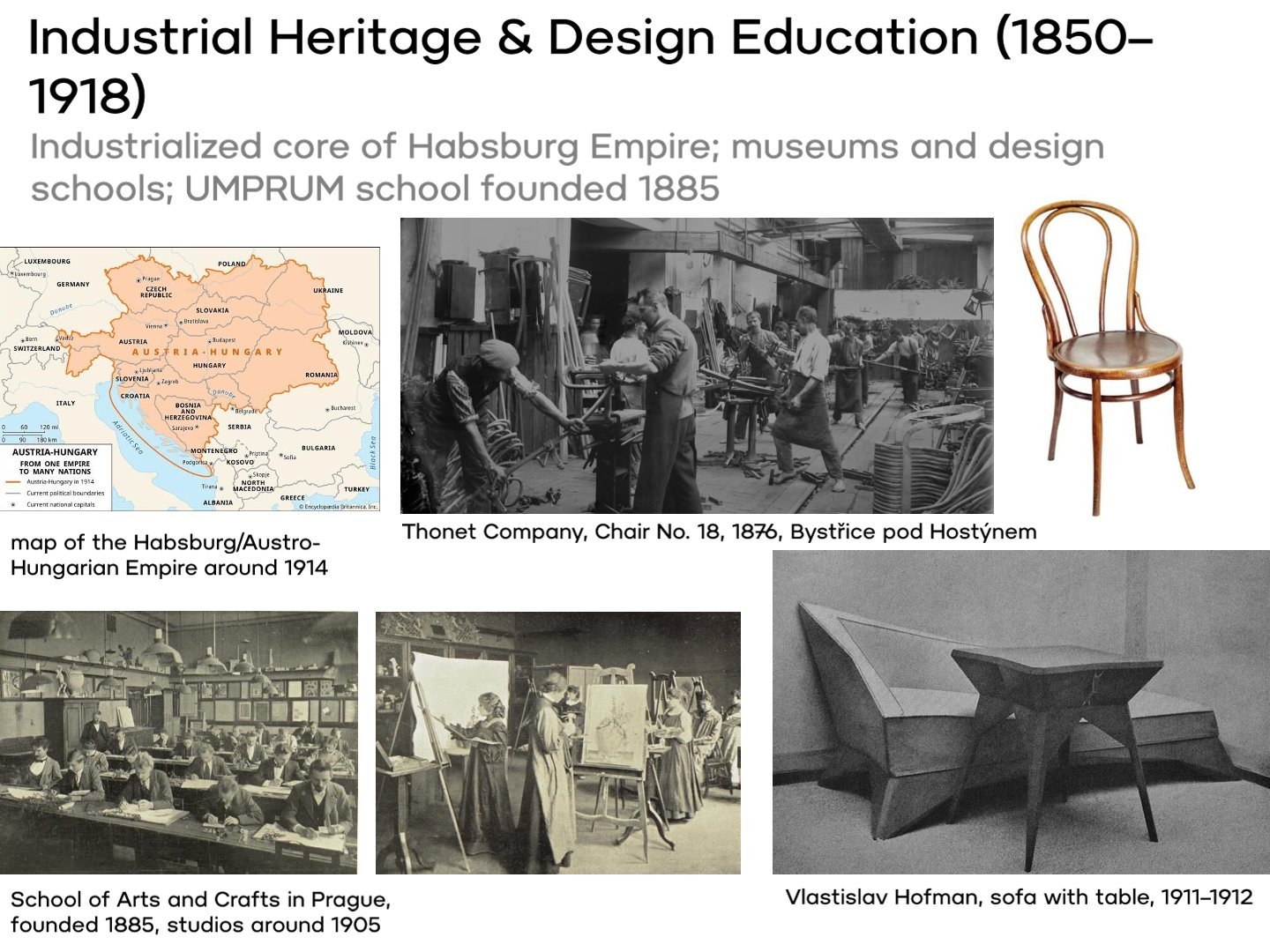
In the second half of the nineteenth century, the Czech Lands formed part of the multinational Habsburg Monarchy, with Vienna as its political and cultural centre. Czech lands were among the empire’s most industrialised regions. Textile production, glassmaking, metalworking and engineering created a strong manufacturing base. At the same time, museums and specialised schools helped connect artistic knowledge with industrial production. The School of Arts and Crafts in Prague, known as UMPRUM, was founded in 1885. Alongside the central school in Vienna, it became an important institution in Central European design education. It offered educational opportunities to young men and, in certain fields, to women, particularly textile embroidery. More broadly, the Czech Lands had a dense network of specialised vocational and craft schools. A particularly successful example of the relationship between industry and design was the Thonet company. Its major bentwood furniture factory, established in Bystřice pod Hostýnem in 1861, helped pioneer large-scale furniture production using steam-bent wood. Thonet chairs combined technological innovation, efficient manufacturing and elegant design, reaching markets around the world. This combination of industrial capacity, craftsmanship and artistic education became one of the foundations of Czech design.
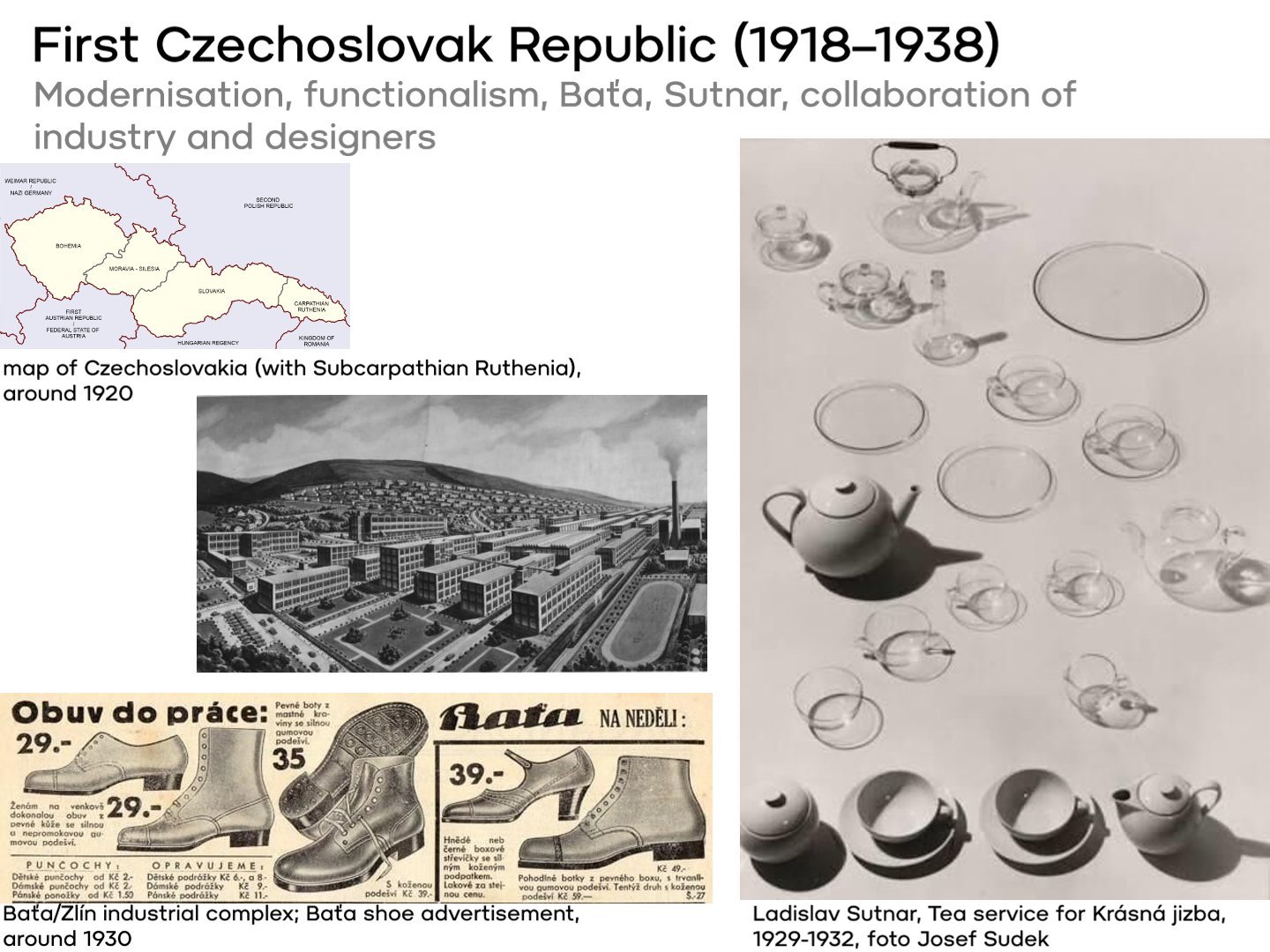
The establishment of independent Czechoslovakia in 1918 created a new political context. During the interwar period, modernisation became a central ambition, and design helped shape a new, democratic way of life. Functionalism, rationalisation and closer cooperation between designers and industry were key developments. Two examples illustrate different dimensions of this process. The Baťa company in Zlín extended far beyond footwear production. It developed an innovative industrial and organisational model that integrated manufacturing, management, architecture and urban planning. Efficiency and standardisation became central to its approach. In contrast, Ladislav Sutnar’s work for the design association Krásná jizba brought modern design into the home. His tea service demonstrates how clear geometry, functional logic and visual simplicity could make well-designed objects both practical and accessible to ordinaryusers rather than reserved for social elites.Together, Baťa and Sutnar represent two complementary ambitions of modern design: the rational organisation of industrial production and the transformation of everyday life through thoughtfully designed objects.
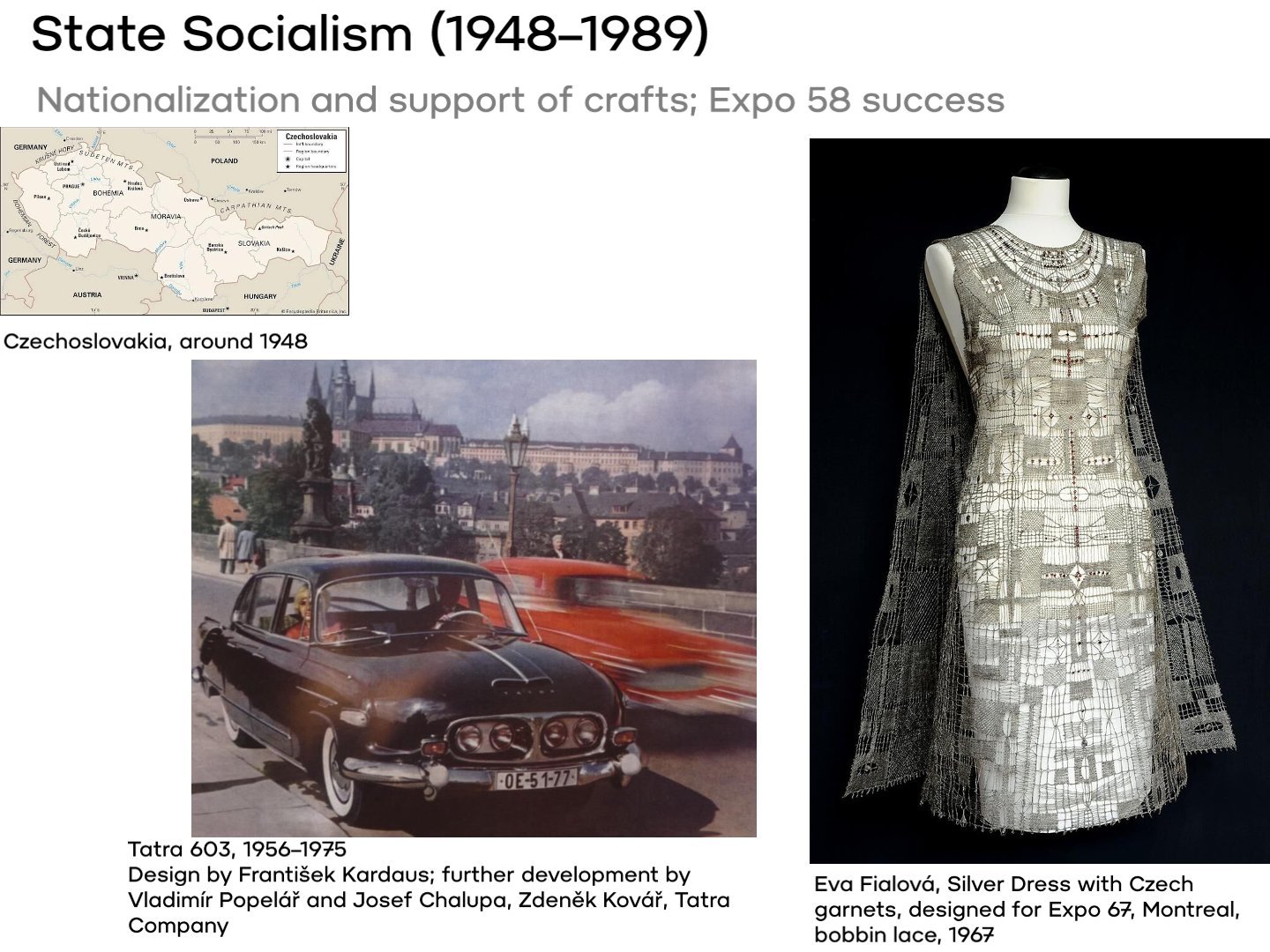
After the communist takeover in 1948, private industry was nationalised and production became centrally managed. This fundamentally changed the conditions under which designers and manufacturers worked. Yet this period should not be understood simply as a rupture with the past. Existing technical expertise, industrial capacity and specialised craft knowledge – somehow – continued to support innovative products, although within a very different political and economic framework. Consider, for example, the Tatra 603, designed by František Kardaus and further developed by the Tatra team. Its streamlined form and advanced engineering made it one of the iconic products of post-war Czechoslovakia. It received an award at Expo 58 in Brussels. A very different example is Eva Fialová’s dress created for Expo 67 in Montreal, which combined traditional bobbin lace with Czech garnets. It brought together exceptional craft skills, precious materials and the international ambitions of Czechoslovak cultural presentation during Cold War. These examples reveal the diversity of design during the socialist period. Despite the constraints of a centrally planned economy, industrial innovation, artistic creativity and specialised craftsmanship continued to interact.
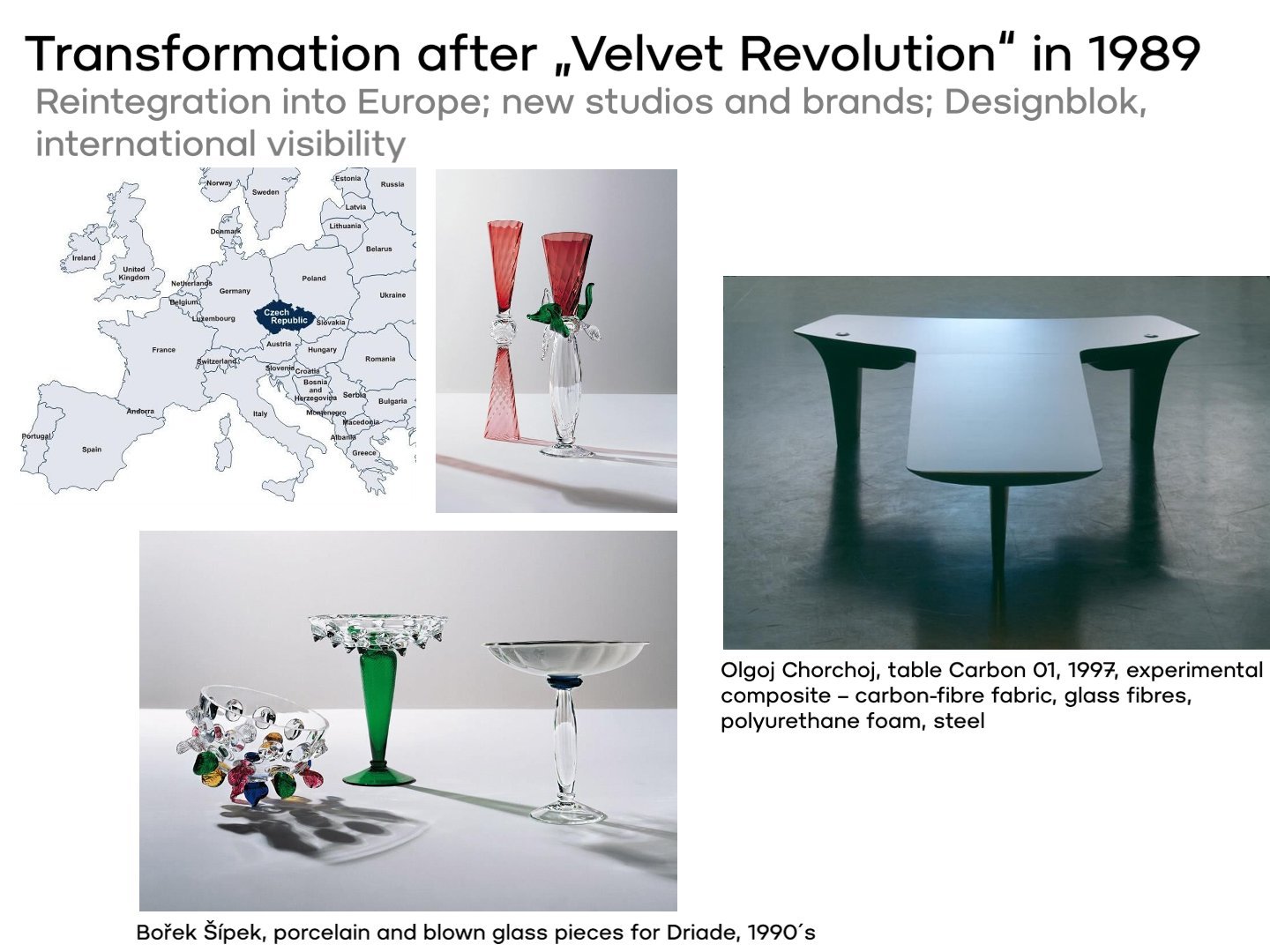
The Velvet Revolution of 1989 brought profound changes to the Czech economy and cultural landscape. Designers gained new opportunities to establish independent studios, develop their own brands and work internationally. But this transition was not entirely smooth. Privatisation, changes in ownership and the loss of traditional markets created serious challenges for established manufacturers. Companies had to find new ways to compete, often through innovation, design and international partnerships. Bořek Šípek exemplifies the growing international exchange of this period. He collaborated with companies including Driade, Vitra, Alessi and Rosenthal, and founded the Czech glassworks Ajeto in the early 1990s. His eclectic postmodern decorative language, his work connected with Václav Havel and Prague Castle, and his teaching helped bring Czech design into wider international networks, including Milan’s Salone del Mobile. A contrasting example is the Carbon 01 table, designed by the Olgoj Chorchoj studio in 1997. Combining carbon-fibre fabric, glass fibres, polyurethane foam and steel, it explored new materials and technologies through a more restrained, minimalist formal language. Together, these examples demonstrate how the post-1989 period brought both creative freedom and new economic pressures. The relationship between design, manufacturing and global markets became increasingly important.
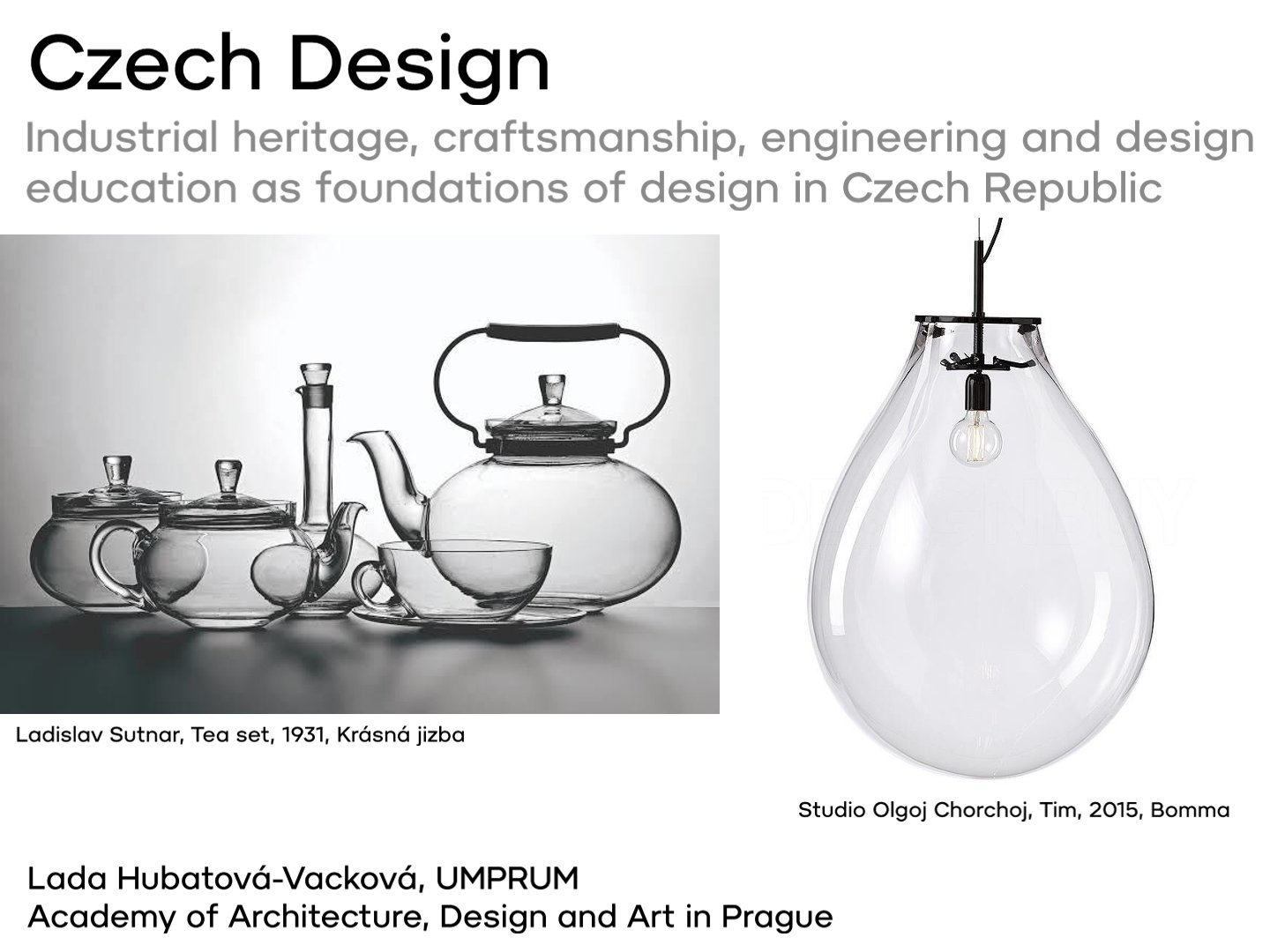
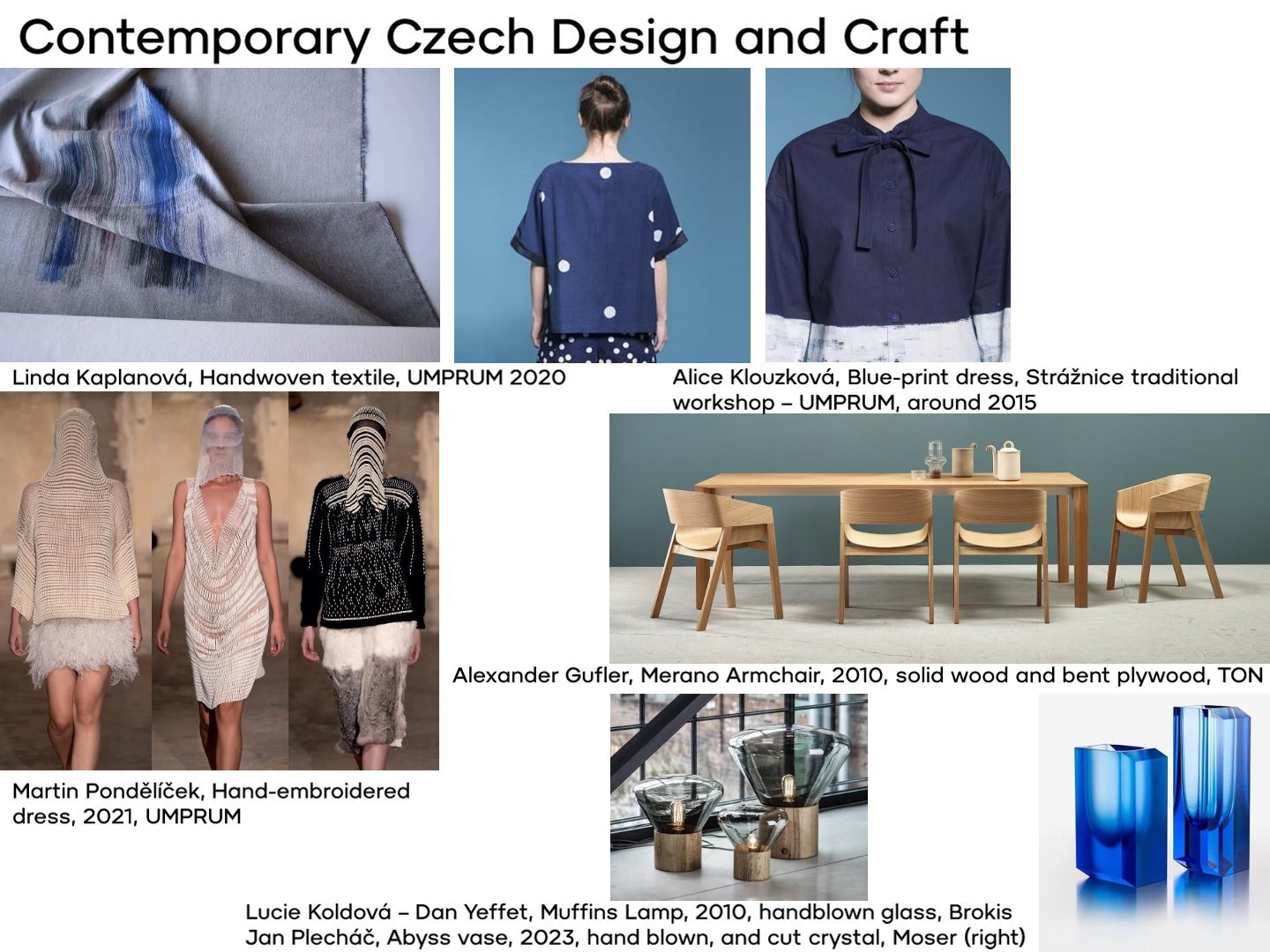
Today, Czech design is not defined by a single recognisable style. Its strength lies instead in collaboration between designers, manufacturers, craftspeople, researchers and educational institutions. The glass industry provides particularly clear examples. The Muffins lighting collection by Lucie Koldová and Dan Yeffet for Brokis relies on the expertise of skilled glassmakers. Here, hand-blown glass is not simply a decorative material; it is fundamental to the product’s identity. Jan Plecháč’s Abyss vase for Moser, introduced in 2023, similarly demonstrates how demanding glassmaking techniques and a long manufacturing tradition can support a contemporary visual language. Furniture offers another example of this dialogue between heritage and innovation. Alexander Gufler’s Merano armchair for TON builds on the company’s experience with bentwood furniture, adapting specialised knowledge of wood bending to contemporary requirements for comfort, simplicity and sustainability. Craft also remains an active field of experimentation. At UMPRUM, Linda Kaplanová and Martin Pondělíček explore handweaving and embroidery, while Alice Klouzková works with the traditional blue-print textile technique from Strážnice. Their work shows that craft is not merely a heritage to preserve, but a living source of knowledge and innovation.
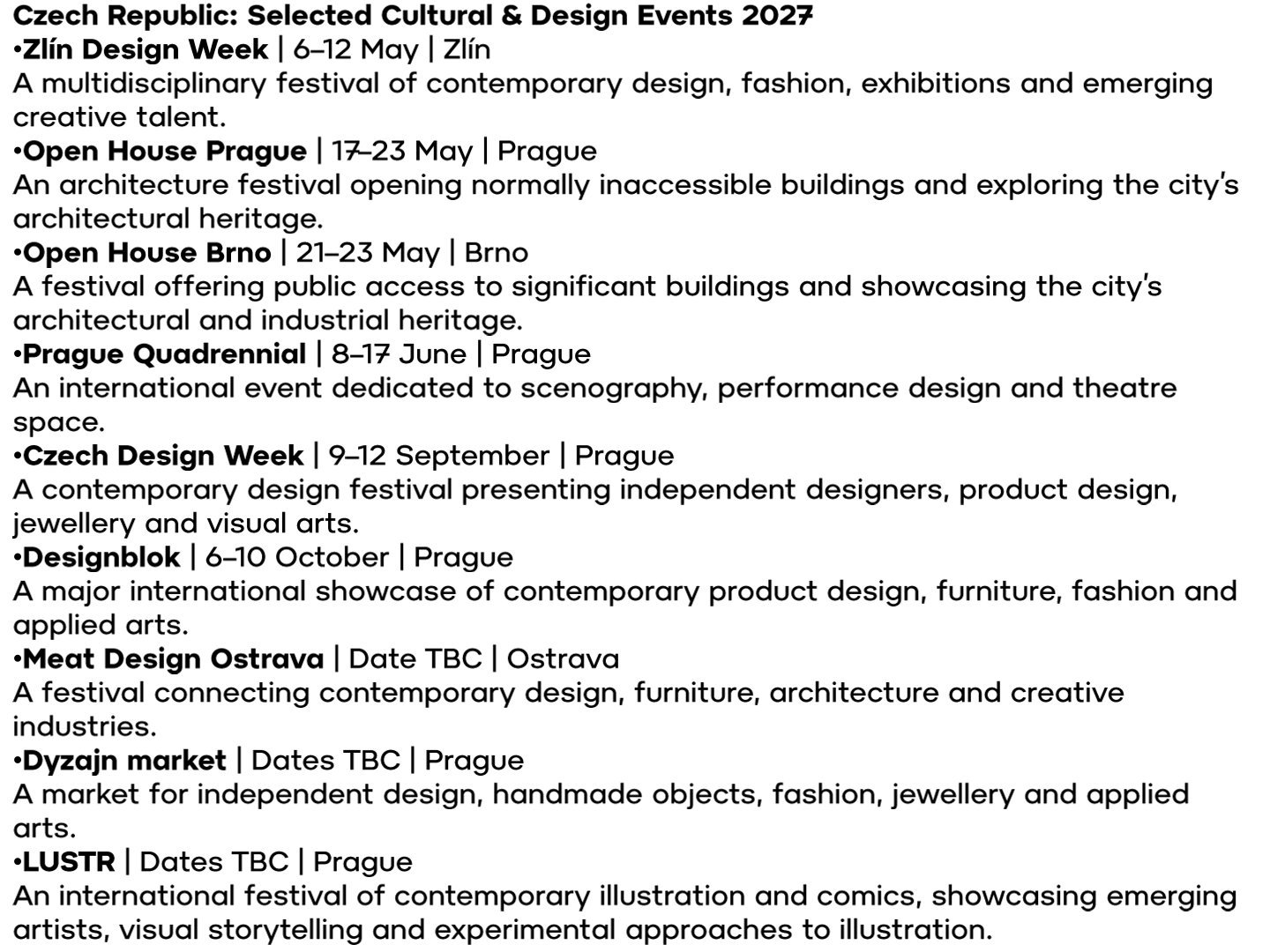
Finally, a selection of upcoming Czech cultural and design events is presented, accompanied by a warm invitation to visit the Czech Republic, where this design culture can be experienced firsthand. To conclude, Czech design is defined less by a specific national style or a fixed notion of “Czechness” than by its ability to bring together industry and craft, tradition and innovation, local knowledge and international exchange. This culture of collaboration has shaped the development of Czech design in the past and will remain equally important in addressing future social, technological and environmental challenges, from 3D printing, digitisation and robotics to the use of AI technologies. Environmental responsibility—including thoughtful material choices, recyclability, lower carbon footprints and sustainability throughout the product life cycle - should be an integral and self-evident part of the entire design ecosystem.
Czech Design