



Minister of Foreign Affairs Petr Macinka attended the Foreign Affairs Council (FAC) in Brussels
16.03.2026 / 17:00 | Aktualizováno: 16.03.2026 / 18:52
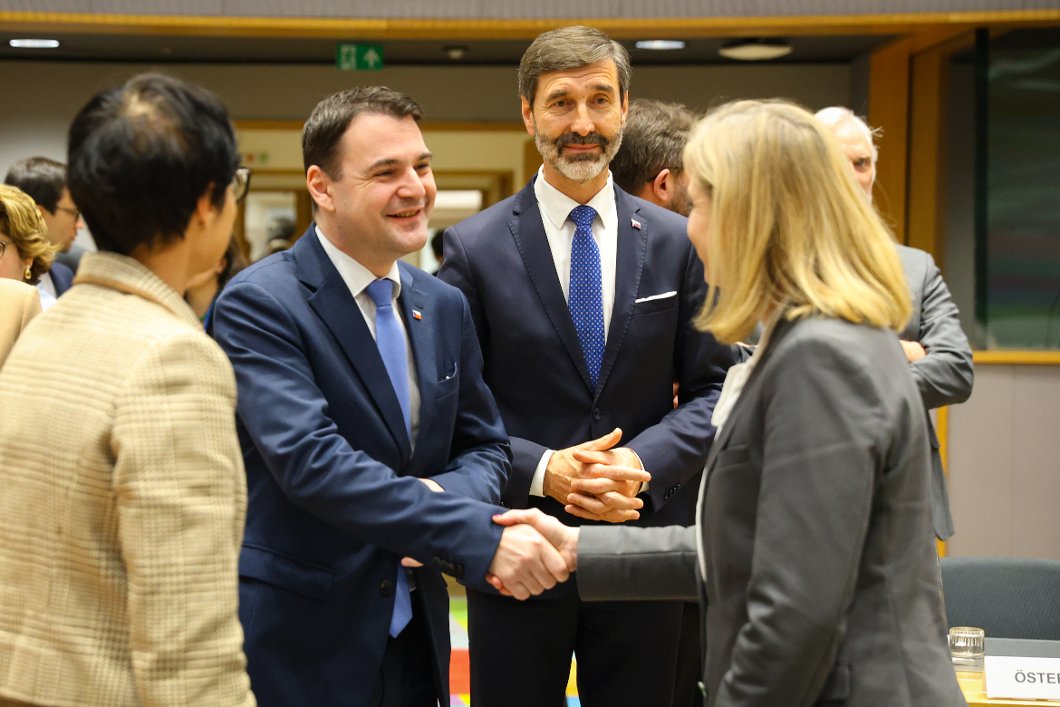
Deputy Prime Minister and Minister of Foreign Affairs Petr Macinka participated in the meeting of the EU Foreign Affairs Council (FAC) in Brussels on Monday, 16 March 2026. The main topics of the discussions were the ongoing war in Ukraine and the 20th package of sanctions against Russia, the current developments in the Middle East, and the situation in the European Union’s southern neighbourhood.
The discussion on Russia’s war against Ukraine took place with the participation of Ukraine’s Minister of Foreign Affairs Andrii Sybiha, who joined the meeting via videoconference. Ministers focused on the next steps for the European Union in response to the dispute between some EU Member States, strengthening sanctions pressure on Russia, and issues related to the regional security situation.
In connection with the blocked 20th sanctions package, the Czech Foreign Minister stated that the Czech Republic is ready to lead an international independent mission of energy experts to Ukraine to assess the condition of the Druzhba oil pipeline. The aim would be to help resolve the issue of disrupted oil supplies, which could ease Slovakia’s and Hungary’s position regarding the sanctions package.
“The only apparent obstacle is the unresolved dispute between Slovakia and Hungary on the one side and Ukraine on the other regarding oil supplies. That is why we propose a solution in the form of an independent mission,” said Minister Macinka.
Another important topic was the situation in the Middle East and its impact on European countries, particularly in the areas of energy security, maritime security, and regional stability.
The programme also included a working lunch with India’s Minister of External Affairs Subrahmanyam Jaishankar, during which ministers discussed the further development of relations between the European Union and India, as well as the situation in the Middle East, particularly in the Strait of Hormuz.
On the margins of the meeting, Minister Macinka also held a number of bilateral meetings. He met with his counterparts from Cyprus and Slovenia and also held talks with the foreign ministers of Austria and Slovakia in the Slavkov format (S3).
Within the S3 format, ministers discussed the possibility of a joint visit to the Western Balkans and the coordination of future meetings with strategic partners such as France and India.
During his meeting with the Cypriot Minister of Foreign Affairs, Petr Macinka—alongside bilateral issues—also appreciated Cyprus’s role as the current Presidency of the Council of the European Union and the functioning of the evacuation system assisting with the relocation of citizens from crisis areas in the Middle East.